
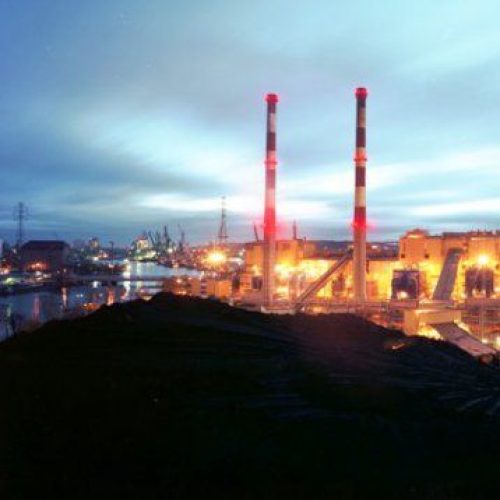
For over 24 years, the French energy group EDF has been active in the Polish electricity and heat market. Since then, by pursuing a policy of strong engagement in local markets, it has consistently strengthened its position by acquiring stakes in Poland’s largest combined heat and power plants and energy sector facilities. EDF Polska Centrala coordinates the activities of EDF’s subsidiaries in Poland. Within its structure operates the Shared Services Center (CUW), whose main tasks include providing comprehensive support to the group’s companies in the areas of finance and accounting, human resources management, and IT support (including administration of the SAP HR system).
Organizing a Shared Services Center for a corporate group composed of entities with different histories, management models, and organizational structures is quite a challenge, however, as EDF emphasizes, the reorganization and centralization of support services within the Shared Services Center is a key element on the path to achieving the group’s economic efficiency.
One of the shared functions carried out at the CUW in Kraków is human resources administration and management, as well as payroll processing for all more than 3,500 employees of the EDF Group in Poland. The centralization of HR and payroll tasks within the group is facilitated by the SAP HR system, which is integrated with other areas.
In addition to the financial benefits, the other advantages of this employee services model are obvious: a single source of employee data, extensive capabilities for reporting HRand payroll, standardization of HR processes across all group companies, leveraging economies of scale by centralizing employee services for multiple companies in one location, and developing a consistent employment and workforce development policy—these are just the most basic ones. However, this is the employer’s perspective.
For an employee, the consequence of their company becoming part of a corporate group or the centralization of processes at the Central Payroll Office (CUW) may be that the HR and payroll department becomes “more distant” and access to HR information that is important to them becomes more difficult.
Information Is the Foundation of Communication with Employees
The flow of HR information is crucial in every company. It is particularly important in large companies with a decentralized structure that employ a significant number of people. In an organization as large as EDF, the centralization of HR processes at the CUW does not mean that all employees responsible for HR and payroll work in Kraków. In addition to the headquarters, local branches operate within individual companies, providing day-to-day support to employees by preparing the necessary certificates for them or collecting information about events (changes in personal data, sick leave, etc.).
However, as in any company, the HR and payroll departments of the Group’s companies are inundated with questions: how much vacation time I have left, when I’m scheduled for my periodic medical exam, exactly when I’m supposed to return to work after maternity leave, when payroll will be processed, and how much my paycheck will be this month… Providing this information individually to each person generates a significant amount of work.
In large or geographically dispersed organizations—especially in manufacturing or service companies, where not all employees have access to the company email system or intranet—there is often a lack of a tool that would help track deadlines and send timely notifications about mandatory training, employee evaluation dates, or the need to submit documents or certificates. That is why employers are looking for a solution that will streamline and automate the distribution of such information.
Notifications Regarding Personnel Matters
Since December 2011, the EDF Group’s Shared Services Center in Poland has been using the All for One EasyReminderapplication. This solution, based on the SAP HR system, allows for the definition and subsequent sending of notifications regarding HR events via SMS and/or email. The goal of the implementation was to streamline the process of informing employees and managers at EDF Headquarters, EDF CUW, the Rybnik Power Plant, the Kraków Combined Heat and Power Plant, Energokrak, the Wybrzeże Combined Heat and Power Plant, Everen, Wrocław Kogeneracja, Toruń Cergia, and PEC Tarnobrzeg.
The app is designed to use data stored in the SAP HR system (e.g., information about the date of return from leave, the expiration date of periodic medical exams, and the contract end date) and convert it into short text messages that are sent to selected recipients or groups of recipients.
Different Types of Notifications
Of the features offered by All for One EasyReminder, EDF initially decided to use three types of employee notifications:
- notification of absence,
- a reminder of the deadline for periodic examinations,
- Information about payroll transfers.
Absence notifications are generated when an employee returns to work; they include information about the type of absence from which the employee has returned (vacation, childcare, sick leave) and how many vacation days the employee has left to use this year. These types of messages are sent only to employees. Reminders about upcoming periodic medical examinations are sent to both the employee and their immediate supervisor (manager). The last type of information is also sent only to employees—it concerns payroll transfers, specifically the salary amount.
The date the information is sent is defined in All for One EasyReminder and can be synchronized with information from the finance department. The payroll notification is generated automatically after the payroll list and the corresponding transfer information are generated in the system; it is then buffered and sent only after the transfer is completed (the payroll may be prepared by the payroll department even several days before the actual transfer date). It is also possible to set up a follow-up message (e.g., a notification that a medical exam is set to expire in a month, followed by a reminder two weeks before the expiration date).
Email or text message?
All for One EasyReminder allows you to send information via two distribution channels: email and SMS. Although sending SMS messages through mobile network operators’ gateways incurs certain costs (unlike email), the EDF Group decided to use SMS for several reasons. First, not all employees have access to a computer or company email. The second and more important reason stems from the nature of the information being transmitted. This data is sensitive, containing personal information and salary amounts. EDF determined that SMS is a more secure communication channel because data transmission to the carrier is encrypted. Additionally, SMS is faster than email.
Information is sent only to employees who have provided their phone numbers and consented to receiving such messages. At EDF Group companies, the number of people interested in these types of messages is growing month by month.
From SAP to SMS
The way the All for One EasyReminder app works is quite simple. For each event you want to report based on data in the system, you define a recipient or group of recipients—whether the message goes only to employees or also to their supervisors—when the notification will be sent in relation to the event (before or after the event), and whether it will be repeated. For recurring notifications, you can also specify the date on which the relevant notification or message will be sent.
The application runs automatically once a day (and can also be run manually if necessary), and during this cycle, it collects the data from the system needed to generate the defined messages.
The message content itself is generated dynamically. For the fixed text segments stored in EasyReminder, the application retrieves data from the relevant infotypes or SAP system tables (e.g., information about remaining vacation days from infotype 2001, salary amounts from the payroll transfer table and the payroll cluster).
As a result, a finished message is created.
Below are the text messages received by EDF Group employees.
- Returning from a leave of absence:
“Please be advised that as of dd/mm/yyyy you have used your vacation time
<subtype_name_for_which_return>: <reduction_value>
Days remaining:
rest: <value for subtypes (A+B+…) (including, upon request, <>) >
overdue: <value> (subtype A for reduction dates…)
Internship: <> (subtype E)
4th Brigade: <value> ( subtype F)”
- Payroll Transfer
“Please be advised that we have made a transfer in the amount of: <value>”
- Periodic examinations:
“Please be advised that on dd/mm/yyyy the periodic examinations will expire.”
Developing a Human Resources Policy
Although EDF currently uses three types of notifications, the solution is flexible enough—and at the same time easy to use and administer—that in the future, as staffing needs grow, SAP administrators at CUW will be able to expand the scope of messages sent to employees and managers to include other events, such as training information, notifications about the expiration of technical certifications, etc. In practical terms, it is possible to send a notification about almost any time-sensitive information concerning an employee.
The implementation of the All for One EasyReminder application puts the strategic goals of the EDF Shared Services Center into practice. The solution is one of the elements of implementing the policy to streamline HR processes within the organization and standardize reporting requirements. The automatic generation and distribution of communications to employees also results in significant time savings for HR departments.
But in addition to these benefits for EDF, the employees’ perspective is also important. Easy access to information that is relevant to them—such as vacation time or salary—is one of the factors that build loyalty and trust in the employer.
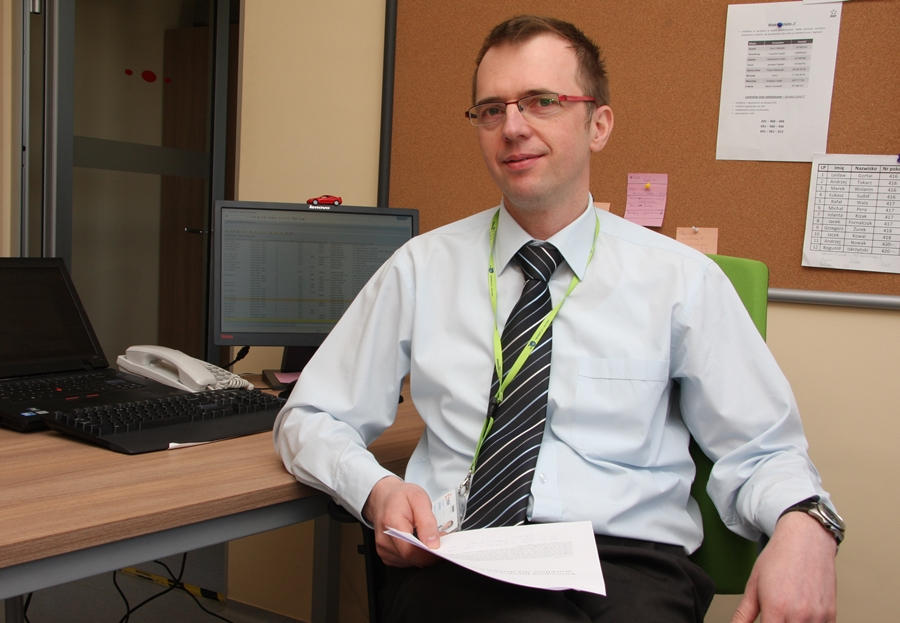
Andrzej Nowak, Head of the SAP Competency Center, EDF Polska CUW
More and more people are interested in SMS
The decision to implement All for One EasyReminder at the EDF Group in Poland resulted from discussions between the HR and IT departments regarding opportunities to better utilize and further develop IT tools that support HR processes within the company. EasyReminder proved to be an attractive, user-friendly application that met these expectations. At a relatively low cost, this tool enables better utilization of SAP, which is the integrated IT system for managing HR and payroll processes within the group.
The SAP HR system supports over 3,500 employees of EDF Group companies in Poland, more than 1,500 of whom are users working directly within the system. Given their geographic dispersion, All for One EasyReminder significantly facilitates communication between the HR department and employees, providing an additional channel of communication and enhancing the company’s image in the eyes of its employees.
To date, approximately 500 people have expressed a desire to receive SMS messages from EasyReminder (because sensitive data is sent, each person must provide written consent to receive these messages). Last month, the system sent nearly 1,600 such messages. The number varies depending on the number of HR and payroll events that occur during a given period.
We informed employees about the new tool—and thus this new communication channel—in our monthly magazine “Wspólna Energia,” as well as via email and conversations with their immediate supervisors. The initiative itself has been received positively by employees, and the number of people willing to receive information from EasyReminder is growing day by day. The only source of concern is the transmission of salary data. The tool is very flexible, so we do not rule out further expanding the scope of information we plan to share with employees.
Andrzej Nowak, Head of the SAP Competency Center, EDF Polska CUW