


SAP Cloud ERP implementation
The path to the SAP Public Cloud
When a company chooses an ERP system, it's rarely just about getting a new one accounting, logistics, or reporting systems. Usually, it's about something bigger: streamlining the work of the entire organization. Duna Polska has implemented SAP Cloud ERP across 17 companies. Approximately 200 active users, and the project encompassed over 100 SAP Best Practices processes, over a dozen integrations, and bots supporting day-to-day the project. All for One Poland served as the implementation partner.
When a company chooses an ERP system, it's rarely just about getting a new one accounting, logistics, or reporting systems. Usually, it's about something bigger: streamlining the work of the entire organization. Duna Polska has implemented SAP Cloud ERP across 17 companies. Approximately 200 active users, and the project encompassed over 100 SAP Best Practices processes, over a dozen integrations, and bots supporting day-to-day the project. All for One Poland served as the implementation partner.
Duna Polska specializes in road and bridge projects, building construction, and power engineering projects. It carries out complex projects where schedules, costs, equipment, subcontractors, materials, and quick access to reliable data are critical. This is not a company where the ERP system is used solely for accounting. The system must integrate finance, management accounting, procurement, sales, and projects, as well as data from several line-of-business systems.
Implementing an ERP system from scratch - though not from zero
Duna Polska already had experience with the SAP system. This is an important, somewhat paradoxical aspect of this story. However, the project in question was not a technical migration of the old environment to the cloud, nor was it a simple one-to-one transfer of the existing solutions.
It was a greenfield implementation of SAP S/4HANA Cloud Public Edition. This is a cloud-based ERP system designed for companies that want to base their key processes on standards proven in the business practices of thousands of companies, rather than on customizations that are well-suited to their needs right now, but may become an obstacle to rapid technological modernization or company expansion in the future.
Thanks to the Best Practices available in the system, implementation doesn’t start from scratch. After comparing standard processes with those currently in use within the organization, the project team decides where integration, automation, or expansion is needed—and where a process might need to be modified to align with best practices.
This approach also works well for companies that are on the verge of selecting an ERP system and are facing many dilemmas. Which system should be chosen to replace the current, inadequate ERP? How should processes outside the integrated system be handled? What about the necessary line-of-business systems? And finally, the strategic question: Which solution will not only meet current needs but also prepare the organization for future growth and operations on a larger scale?
Similar discussions preceded the decision to implement SAP S/4HANA Cloud Public Edition at Duna Polska. It was determined that this solution met the key requirements defined during the selection process:
- Continuous access to new features and minimization of the risk of outdated software, with predictable costs for system maintenance and development;
- Efficient integration with line-of-business systems that support industry-specific processes;
- Consistent data and processes in SAP for all affiliated entities;
- The scalability and flexibility of the solution, which support integration with solutions to be implemented in the future.
17 companies and one process standard
The project began in February 2025 during a kick-off meeting in Kraków. The system went live in January 2026. In less than 12 months, SAP Cloud ERP was rolled out to Duna Polska SA and 16 affiliated companies. Three companies implemented the full scope of the system: FI, CO, MM, SD, and PS. The remaining 14 companies implemented the full scope excluding MM.
The statement “We have implemented S/4HANA in 17 companies with different business profiles” involves much more than just configuring modules. We had to design a common operating model for an organization in which the ERP system integrates with construction project management, support center costs, asphalt mixing plants, equipment inventory, HR, and payroll.
So it wasn’t just about choosing a cloud-based ERP system. It was about implementing an ERP system that would combine SAP standards with the company’s business practices.

The process of circulating and approving invoices for payment has been streamlined, and thanks to well-implemented processes, the company now has access to reliable management information that allows it to prepare reports more quickly and make decisions more efficiently.
Better management information, shorter invoice processing time
In day-to-day operations, the benefits of the implementation are particularly evident in the areas of invoice processing and management reporting. The process of routing and approving invoices for payment has been streamlined, and thanks to well-implemented processes, the company now has reliable management information that allows it to prepare reports faster and make decisions more efficiently. Much of this success is due to the commitment of key users at Duna Polska and the implementation consultants at All for One, who focused on adapting the SAP standard to our processes and ensured integration with line-of-business systems.
Data consistency between SAP and the systems supporting key business processes has improved significantly. Reporting to the Ministry of Finance is now more efficient thanks to the use of SAP DRC statutory reports and dedicated reports based on CDS views. The transparency of financial and operational processes has also increased.
Automation has reduced the number of manual tasks. Standardization has made it easier to control processes. Business Partner master data has been organized into a single model.
For a multi-company organization, this is a significant change. Less work at the interface between systems. More consistent data.
Jakub Żwirek
Project Manager and IT Manager, Duna Polska
Fit-to-Standard
The implementation was carried out in accordance with the SAP Activate methodology. This is a structured approach to managing SAP projects, divided into phases, deliverables, tests, decisions, and checks to ensure readiness for subsequent phases.
Requirements were gathered during the Fit-to-Standard phase. In practice, All for One consultants presented the processes available in the SAP Cloud ERP standard and then worked with the business team to verify whether they aligned with the company’s way of working. Only when the standard proved insufficient were options for customizations, integrations, or automation explored.
This approach is particularly important in greenfield implementations. It helps prevent old habits from carrying over into the new system. It also helps speed up decision-making, because the discussion doesn’t start with a list of exceptions, but with a ready-made process.
Another important principle in the Duna Polska project was the “Clean Core" principle, which involves maintaining a clean system core without the ability to modify the source code. This makes it easier to implement future SAP updates and expand the system in the future.
The project was managed in SAP Cloud ALM—an SAP tool for managing tasks, tests, work status, and risks. The schedule was discussed at weekly project manager meetings, and key decisions were brought before the Steering Committee.
SAP Cloud ERP at the center. Integrations built around it
In the landscape of Duna Polska’s systems, SAP is the core, but it does not operate in a vacuum. It must exchange data with applications that support the company’s day-to-day operations outside of the ERP system.
At Duna Polska, SAP Cloud ERP has been integrated with, among others, WEBCON, a platform used to support numerous business processes related to document workflow, request approval, and information flow management. The solution supports the execution of complex processes that require verification at successive stages, approval by various participants, and the collection of data from multiple areas of the organization. The platform also serves as a central document repository, enabling the secure storage and archiving of contracts and other documents requiring long-term retention.
Duna Polska uses the Intense system to manage processes related to construction projects. Another system that needed to be integrated was an external reporting platform.
All for One used the SAP Integration Suite as its integration platform. This SAP solution enables centralized management of data exchange between systems and offers ready-made components and integration scenarios. In practice, it reduces the number of direct connections between applications, simplifying the architecture and making it easier to maintain.
The project also included SAP integration with KSeF, JPK_V7M reporting, verification of accounts on the White List, integration with online banking systems, importing payroll data from an external system, a dashboard for managing purchase orders, and an application for importing accounting documents for certain sales processes handled in external systems.
All for One has developed a solution that supports the preliminary posting and detailed description of purchase invoices, as well as their preliminary accounting, using the standard SAP API.
SAP Flexible Workflow—SAP’s standard mechanism for defining approval workflows—was used in the purchase invoice process.
In addition, two bots were launched to automate repetitive tasks.
This is where the practical value of ERP comes into play. Less re-entry. Fewer manual workarounds.

We knew from the start that the project’s success would not depend solely on technology. The key was to develop a shared approach to business processes and leverage SAP best practices. This required a high level of commitment from both the business teams and the consultants, but it allowed us to focus on what matters most: business value.
Data, testing, go-live
An ERP implementation from scratch is only successful when not only the configuration but also the data, users, and processes at the interface between systems are functioning properly.
Prior to launch, integration tests, user acceptance tests (UAT), and data migration and validation were conducted. Test scenarios and test plans were prepared using SAP Cloud ALM templates. The completed scenarios were imported from Excel into UAT, which streamlined the testing process and reduced manual work.
One of the key tasks was the migration of Business Partner master data. It covered all 17 companies. The data was analyzed, cleaned, and verified prior to migration, and then checked again after being loaded into SAP Cloud ERP using the SAP S/4HANA Migration Cockpit. This SAP tool supports the transfer of data to the new system.
The project also included the migration of over 5,000 fixed assets. More than 290 active users were assigned roles and permissions and completed training. During the initial period of using the new system, users received Hypercare support.
The public cloud requires discipline
Implementing SAP Cloud ERP in a public cloud model requires discipline—especially when an organization has spent years working with solutions that are closely tailored to its own habits.
One of the risks was that users expected to see the same functionality they were familiar with from the previous environment. The previous system included custom solutions, reports, and transactions based on ABAP technology. SAP S/4HANA Cloud Public Edition takes a different approach. First, the standard. Then, justified extensions.
The reported requirements were therefore analyzed in terms of their feasibility within the standard, using CDS views, SAP analytical tools, and mechanisms compliant with Clean Core. CDS views can be understood here as a data modeling layer in SAP, used, among other things, for reporting and analytics.
The second risk was the availability of the FI team and SAP consultants during UAT testing. This was addressed through additional working meetings, prioritizing issues, and daily monitoring of their resolution.
Third—the planned upgrade to SAP S/4HANA Cloud Public Edition (Release 2508) during the initial phase of the project. The schedule included a buffer for system downtime, regression testing, and re-verification of key processes.
This is what an ERP implementation looks like in practice. Not everything can be predicted. The ability to manage the project when constraints arise is crucial.
What this project tells companies choosing an ERP system
The SAP implementation in a greenfield scenario at Duna Polska can also serve as a good example for organizations that currently use a smaller ERP system, several line-of-business systems, or solutions that have been developed on an ad hoc basis over the years.
At some point, the existing system begins to hinder growth. It becomes harder to maintain consistent data. It becomes harder to automate processes. It becomes harder to generate reports. It becomes harder to integrate finance, sales, purchasing, controlling, and industry-specific systems into a single operational model. At that point, choosing an ERP system is no longer just a question of the system’s features. It becomes a question of how the company operates.
The project at Duna Polska demonstrates what an SAP Cloud ERP implementation from scratch might look like: using the SAP Best Practices standard as a starting point, employing the Fit-to-Standard methodology, integrating with line-of-business systems, automating repetitive tasks, and preparing users to work within the new model.
It wasn’t about copying the old world into the new system. It was about building a new order.
Agata Szczot
Project Manager, All for One Poland
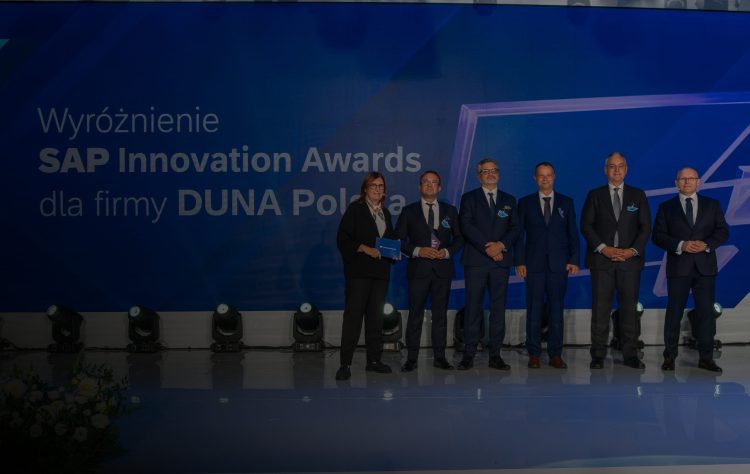
Duna Poland
Duna Polska SA (formerly Mota-Engil CE) specializes in road and bridge projects, building construction, and power transmission projects. The company offers a wide range of high-quality construction services. It has built over 530 km of expressways and highways in Poland. It has been operating in the Polish market for over 25 years and employs approximately 800 people.