

Hortex is one of the best recognized and most trusted Polish brands. Hortex juices and frozen foods are also well-known in other Central and Eastern European countries, as well as in the United Kingdom, Ireland, the United States and Canada. The consistency of Horteks’ operations and business efficiency have been supported by the SAP ERP system since 2006. Horteks’ partner in the SAP implementation was BCC (now All for One Poland).
SAP is used in a wide range of functional areas, including finance and controlling, sales and distribution, materials management and procurement, production planning, and HR. The company also uses the tools of Business Intelligence (SAP BW). A particularly important component of the system is production planning in SAP, which handles the entire production process – from purchasing fruits and vegetables from suppliers to ordering delivery to customers.
In addition to the three production plants and the headquarters in Poland, the SAP system is also used at Ortika Frozen Foods, which is responsible for the distribution of the company’s products on the Russian market. A total of several hundred users work with SAP, who are responsible for the entirety of the company’s business on a day-to-day basis – from raw material receipt, through ordering, accounting, financial management, budgeting, short- and long-term planning, and building development strategies.
As Ewa Kaczor, SAP Manager at Horteks, emphasizes: “The importance of SAP in Horteks can be compared to the nervous system of a human being, the smooth operation of which guarantees the correct functioning of the other systems. Such a complex structure has a certain sensitivity, so it requires a lot of action on an ongoing basis: questions arise, issues to be resolved, minor problems both functional and technical, various development ideas. Employees of the Application team responsible for the proper operation of the system and assistance to users have something to do."
On the front line of support
Ongoing user support uses the company’s own resources. There is an SAP Administration team at Horteks, which is the so-called first line of support for end users.
The members of this team mostly consist of the company’s long-standing employees from various business areas, who were involved as members or heads of work teams in the various areas during the 2006 system implementation, and then were key users of the system. Their competencies gained during the project and later during their work with the system, as well as the many training courses and workshops they have received, now also serve other SAP users.
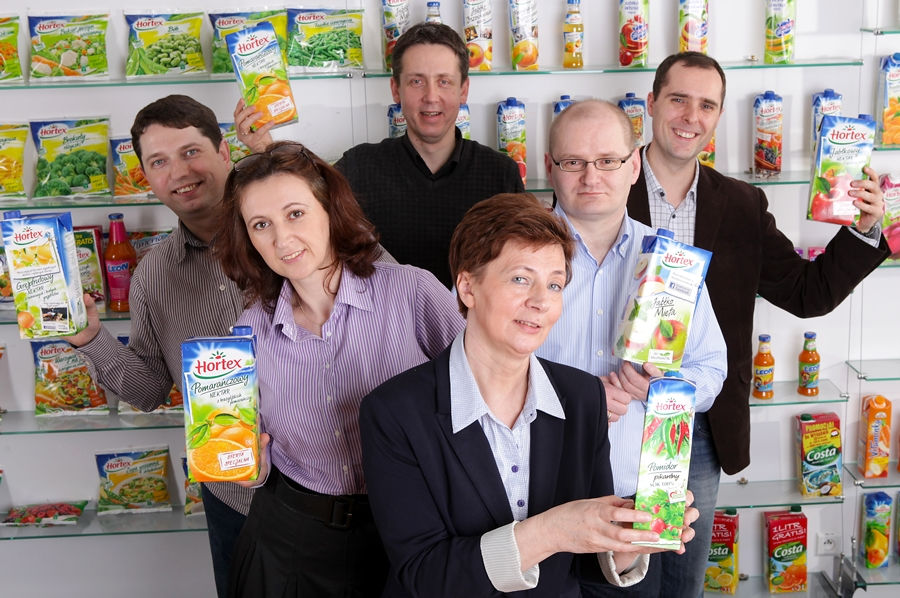
The team consists of four people, SAP ERP application administrators, responsible in turn for modules: SD, PP (Ewa Szymanska), MM – procurement and purchasing (Piotr Tyrka), data warehousing (Piotr Górecki); SAP Manager Ewa Kaczor, who is also the head of the SAP Administration team, is responsible for the HR and FI/CO areas.
In addition, Mieczyslaw Kaczor, SAP Systems Administrator, is responsible for SAP administration in BASIS and XI.
SAP service is not the main focus of the SAP Administration team. We extensively provide assistance in adapting business processes to the functionality that SAP provides. We often solve organizational problems not directly related to the system. We are guided by the principle – first, an in-depth analysis of the problem, and only then do we try to use SAP in the most optimal way to solve it.
Applications are customarily addressed to us by phone or e-mail. We prefer telephone contact, as we solve some problems already during the conversation. More extensive problems require users to describe them and send them by e-mail. If the problem does not require direct changes to the system, we archive such a request in the mail. Requests that result in configuration or functional changes (made as part of internal support or by BCC) require users to fill out the appropriate requests, which we archive in the form of signed PDFs for documentation of system changes.
Receiving user submissions in Russia operates on a similar basis. However, they include phone and e-mail submissions through an internal communicator.
Requests handled by the team of Hortex employees are both repetitive problems related to the day-to-day operation of the system, as well as work requiring very good knowledge of SAP from the functional side and the business processes implemented in it.
When expert knowledge is needed
This organization of user support is an excellent example of the use of SAP’s internal potential and competence capital available in the company. However, such a complex and “living" IT system as SAP, in which business activities are carried out, requires constant administrative and development work – the so-called second line of support. Often the knowledge of a specialist consultant in particular areas is needed for such tasks. Deciding on a model for administration and service support of the system involves either buying ad hoc consultation for maintenance and development work, or signing a service contract that guarantees access to the competence and time of specialists of an external supplier at an agreed level.
It was the latter option that Hortex chose, using external partners for SAP user support and administration services. Last year, the company decided to change partners and has been working with BCC since February 2011, using administration support and SAP application service in all areas of the system.
Application service – what is it?
SAP’s own Administration Team provides direct support to system users in the ongoing operation of the system, as well as in case of problems. And yet, at Horteks, it was decided that possible ad hoc consultations were not enough to guarantee smooth system operation. There is no vendor on the market that is able to “off-the-shelf" without prior reservations and arrangements to provide a consultant specialist in a particular area and with the required level of knowledge to work for the customer. Ad hoc consulting may work well for planning development work that is not urgent, but what about in the event of an unexpected failure that requires an immediate response?
The advantage of being served by a professional service organization is the guarantee of availability to SAP specialists with specific competencies and within the (short) time specified in the contract.
Using the SAP application service at BCC (currently All for One Poland), Hortex is assured of remote assistance in resolving reported problems. In addition, SAP is monitored on an ongoing basis by BCC specialists for irregularities in areas that may cause problems in its operation in the future.
The details of cooperation are established in the service contract, which regulates the scope of support, the service model, the terms of execution of work and the method of settlement. The terms are set individually – according to the customer’s expectations. This flexibility is one of the distinguishing factors of BCC’s offer. But not the only one.
“Few providers of this type of service have dedicated teams of service consultants within their structure for specific areas of the system. Additionally, customer service is organized around a single point of contact (SPoC). We simply report the problem to the BCC, and their Service Desk handles the registration and further distribution," says Ewa Kaczor.
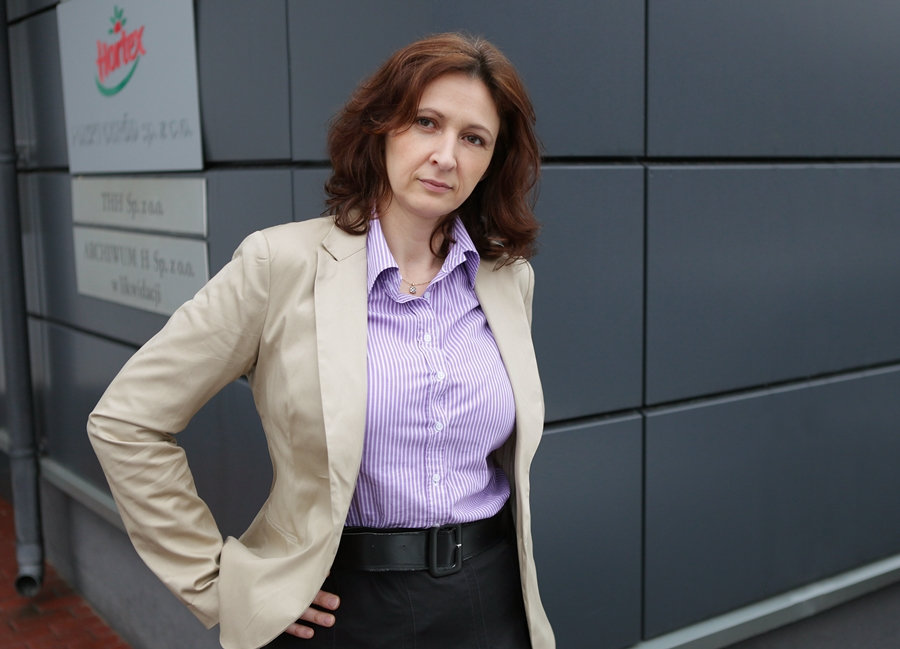
Ewa Kaczor, SAP Manager, Hortex
With a production system, there is often no time to search for solutions, you need to act as quickly as possible. The priority system for service requests, which we have guaranteed at the BCC help desk, is ideal in such cases
“The customer service model, as well as the SLA (service level agreement) conditions guaranteed in the contract, which depend on the priority assigned to the request, determine the response and completion time of the request, as well as the hours of availability of consultants providing support. This approach to the provision of application support is in line with the IT Service Management System implemented at BCC in accordance with ISO 20000 and ITIL recommendations," adds Jakub Bartkowiak, SA Finance and Controlling Team Leader at BCC, coordinator of application service for Hortex.
One hour – that’s how long the BCC Service Desk Team has to confirm receipt of a request (on business days, from 8 am to 4 pm), then the time to resolve the issue (which varies depending on the priority of the request) begins to count. All requests are recorded in a dedicated application, which is the preferred contact channel, which is additionally used to record the number of requests, response time, and track the escalation path. It is also the basis for billing.
Scale of support
Just as Hortex’s internal SAP Administrator Team brings together specialists in various areas of the system, BCC’s Outsourcing Center also brings together consultants with experience in selected modules. The difference, however, lies in the “point of view." The advantage of the former is knowledge of the company’s business and this particular system, configured and expanded according to Horteks’ needs. BCC employees, on the other hand, in addition to a good understanding of the customer’s system, are also familiar with SAP technology and have experience working for other companies. This gives them access to knowledge that allows them to deal with problems more easily, and sometimes anticipate them. An additional advantage is the ability to take advantage of the “background", which is the service organization and implementation teams at BCC, which carried out the implementation of the system in 2006.
Due to the wide functional scope of the Hortex system, people from several teams are involved in providing maintenance services: first is the Service Desk Team, responsible for receiving, confirming and forwarding requests for processing. Then the tasks go to consultants from the teams of Application Service Finance and Controlling, SA Material Management and Warehousing, SA Production Planning and Quality Management, SA Human Resources Management, SA Sales and Distribution. As a result, nearly 30 people are “involved" in outsourcing services for Hortex at BCC, dealing with individual modules, Basis consultants and ABAP programmers. If necessary, implementation consultants can be engaged to work for the client.
BCC’s single point of contact ensures that a call will be accepted, routed to the appropriate consultant and handled according to the SLA, regardless of the vacation season or flu season.
Coordinators – or the human side of the service
What, on the one hand, is a great facilitator and organizing factor for cooperation – that is, the notification application – on the other hand, should not be too tight a barrier separating the two sides.
As Jakub Bartkowiak points out, “The standard is to appoint a coordinator on our side for each client. For Hortex, I perform this function. A contract is a contract, and the negotiated terms bind us, the Service Desk Team records everything, but nothing can replace personal contacts. Sometimes it’s just easier to call and inform about a sudden change in priorities, clarify the arrangements…. – simply to know that we will not bounce from the application interface. With Ms. Ewa Kaczor, who performs a similar role on the Hortex side, we clarify any misunderstandings on an ongoing basis, inform each other when major work is planned for the system, determine the scope of minor development work or plan workshops for users. Our role is also to keep an eye on the budget and settle the work on a quarterly basis."
From application to solution
The fact that BCC is already a second line of support for system users also determines what kind of problems BCC consultants (currently All for One Poland) encounter.
Jakub Bartkowiak emphasizes: “Most often, these are requests of high complexity, requiring expert knowledge in particular areas of SAP. Many times these are issues related to the development of the functionality used, entailing verification of the risks that their implementation may cause. It should be emphasized that we are dealing with a system supporting the customer’s most important production processes, and any changes must be supported by tests confirming that they will not disturb the stability of the functioning of the entire environment. This is crucial especially for cross-modular applications, where the points of contact with other areas can be numerous. This also requires the involvement of consultants from different areas. There is sometimes development work on modifying print forms or additional reporting requirements.
This is how the service is organized in general. And more specifically? Below we will present, the path that a sample application goes through.
At Horteks, due to the occurrence for the first time of a specific case not supported so far, the user-exit for changing the status and closing the deliveries malfunctioned, resulting in a problem with issuing a sales invoice to a WZ document. ERP Application Administrator for SD modules, PP Ewa Szymanska decides to forward the problem to BCC due to the need to interfere with the non-standard logic implemented for this process and time pressure (without documents, the car with goods cannot leave). As part of the created request, the following elements are recorded: a brief description of the problem, as well as the defined type: service (other possible are development or warranty). The customer has defined the priority as high (according to the adopted definition).
The BCC Service Desk team accepts the request and, in this case, forwards it to the SD/ABAP team of the application service. The SD service consultant at BCC gets to work. The first contact is made with the customer to grant the appropriate permissions and receive access to the production system on which the reported problem occurs. Later still, the BCC consultant additionally contacts to determine the root of the problem (non-standard exit) and the deadline for delivering the change (in this case, the next day at the latest). If the situation requires it, the budget, i.e. the time needed to implement the solution to the problem, is also specified, as well as the conditions for its implementation.
For requests that require the involvement of consultants from other application service teams, the request is interleaved between specialists and teams. In this case, it was necessary to involve an ABAP consultant. Due to the high priority of the task, the programmer’s time was immediately booked to meet the deadline. After the analysis was performed and the solution was delivered, the request with the relevant information was forwarded to the client with a request to test it.
Then, once the solution was accepted, it was transferred to the production system. The sales invoice was issued, the transport left the plant, and the application could be closed.
Sometimes the solution undergoes several iterations to adapt it to customer requirements.
Given the nature of the Hortex system and the use of client extensions realized during the implementation phase, as well as after the production launch, the role of the ABAP team, which is able to catch and make corrections related to the non-standard behavior of the system underlying the reported problem, is invaluable. This is very important given the lack of software vendor support for client extensions as described in SAP service notes.
Requests registered by Hortex are handled in accordance with the established SLA conditions associated with the specific priorities that are assigned to the requests. In sub-critical situations, it happens that the solution is delivered ahead of schedule – the role of the contract coordinators is to organize adequate resources to prioritize the topic and deliver the solution as soon as possible, disregarding the rigors of the SLA.
At Hortex, we do not have to deal with reports of faulty system operation. Because of the experienced team of administrators, these problems are sifted out on the first line of support. Most requests are in the areas of sales and distribution, logistics, and ABAP. The remainder are requests in the MM, HR and finance and controlling modules.

Piotr Drewicz, IT Manager, Hortex
Policy of using needed resources
In recent years, the importance of IT support for business management processes at the Hortex Group has been growing steadily and dynamically. The technological revolution, thanks to investments such as the implementation of the SAP system, has brought the Hortex Group to the next level of development, thereby increasing the value of the company in a world of ubiquitous competition. However, taking advantage of IT advances is associated with costly investments in infrastructure and ensuring its security. Times of recession force us to minimize costs. Any expense that we cannot avoid or significantly reduce is seen as a loss. The same recession, however, forces us to invest in better and better IT systems, as they are largely a competitive advantage.
To reconcile these two contradictory tendencies, we decided to change the model of IT resource management and move from a policy of buying to a policy of using needed resources. By opting for outsourcing services, we assume that the Hortex Group will achieve a number of tangible benefits and improve the quality of the company’s operations. By ceding to an external company the tasks of system management and maintenance, the role of internal IT changes, which under these circumstances can devote all its attention to finding solutions that provide the company with further, even better tools for operations. With a permanent IT back-up in place, the team will be able to focus on new projects without having to analyze the IT potential that would be needed for the new task – which often consumes a huge part of the pre-project work related to estimating the profitability of the entire project. Technical and infrastructural issues usually take up a significant portion of the time allocated to a project, so that the substantive aspects are neglected. Outsourcing will eliminate the project planning stage related to IT facilities, which will be unlimited thanks to this service.
Piotr Drewicz, IT Manager, Hortex
Support for Russia
Russia represents a significant market for Hortex products. Serving the Russian market, the aforementioned Ortika Frozen Foods also uses the company’s SAP system. Users in Russia are covered by the same support scheme – i.e. the first line of support in the in-house team, and if a solution to a reported problem is not found, escalation to BCC.
Although the service model is similar, the peculiarities of doing business in Russia, and especially the mode of introducing new laws, are significantly different from what we are used to in Poland. It is not uncommon for tax or labor law regulations to come into force just a few days after their publication, which gives very little time to adapt the system to the new requirements. This entails carrying out previously unplanned development work in a very short period of time.
Such situations occur especially in the context of printed forms in logistics and sales processes. In Russia, we are very often faced with a specific form design and a precise definition of the information to be included on it. Failure to meet this requirement can have both legal and tax consequences, which is why it is so important to provide the appropriate printouts on time in this rather special environment.
“We are a close-knit team operating the various modules. We complement each other in cross-module areas. However, we were originally key users who learned SAP during the implementation. As a result, there are areas in SAP that are inaccessible to us, which we can develop with the help of the BCC application service (currently All for One Poland). There are many problems that we can’t handle on our own because they didn’t occur to us before. With a production system, there is often no time to look for solutions, you need to act as quickly as possible. The priority system for service requests, which we have guaranteed at the BCC help desk, is ideal in such cases."