

Artificial intelligence
in SAP SuccessFactors
Joule, generative and predictive AI in HR processes
Artificial intelligence supports SuccessFactors users. Chatbot Joule communicates with the employee in natural language, answering questions and performing selected tasks. Generative AI is most effective in recruitment. Predictive AI is used to recommend career paths, prepare job descriptions and optimize job offers, among other things. SAP announces further development of this technology, while ensuring that AI applications in SF are ethical, reliable and guarantee confidentiality. In 2023, artificial intelligence, boosted by the popularity of ChatGPT and DALL-E, drove up the stock prices of tech giants (including Alphabet, Amazon, Apple, Meta, Microsoft, and Nvidia) that invested in developing AI models or the supporting infrastructure. Now it's time for other beneficiaries – companies that will adopt AI in business processes to reduce costs and increase efficiency.
Artificial intelligence supports SuccessFactors users. Chatbot Joule communicates with the employee in natural language, answering questions and performing selected tasks. Generative AI is most effective in recruitment. Predictive AI is used to recommend career paths, prepare job descriptions and optimize job offers, among other things. SAP announces further development of this technology, while ensuring that AI applications in SF are ethical, reliable and guarantee confidentiality. In 2023, artificial intelligence, boosted by the popularity of ChatGPT and DALL-E, drove up the stock prices of tech giants (including Alphabet, Amazon, Apple, Meta, Microsoft, and Nvidia) that invested in developing AI models or the supporting infrastructure. Now it's time for other beneficiaries – companies that will adopt AI in business processes to reduce costs and increase efficiency.
The potential of AI
In the field of human capital management, the potential of generative AI is immense. According to BCG (Julie Bedard, Katie Lavoie, Renee Laverdiere, Allison Bailey, Vinciane Beauchene, Jens Baier: “How Generative AI Will Transform HR"), the use of artificial intelligence will increase productivity in the following areas:
- recruitment – by 25-50%,
- HR administration – by 25-50%,
- employee performance management (goals, coaching, evaluations) – by 10-25%,
- compensation and benefits management – by 10-25%,
- strategic HR planning – by 10-25%.
SAP is actively working to harness artificial intelligence for HCM processes supported by SuccessFactors. SAP is developing its AI models, but it is also using tools from Microsoft (Microsoft 365 Copilot, Microsoft’s Azure OpenAI) and IBM (IBM Watson).
AI in SAP SuccessFactors
Let’s take a look at how artificial intelligence supports SuccessFactors users. The table below shows the key AI applications that are already available to SAP customers.
| AI type | Function | Areas of application in SuccessFactors |
| Predictive | HR data analysis to recommend a solution to the user (using machine learning) | Career Explorer, Talent Intelligence Hub, Opportunity Marketplace, Job Analyzer, SF Learning (personalized training recommendations) |
| Generative | Text generation in the context of business process and data |
Performance Review, Role Readiness Review, 360 Review (text creation assistant for feedback), Recruiting (generating job descriptions, creating questions for the candidate) |
| Conversational | A chatbot communicating with the user in natural language, answering questions and performing HR tasks | Joule |
Artificial intelligence in SuccessFactors
Particular attention should be given to Joule, which is intended to support many SAP solutions (not just SuccessFactors), with SF being the pioneer in its application. Joule is a new chatbot that communicates with users in natural language, answers questions, and performs selected tasks. Joule follows three conversational patterns:
- navigational – helps users navigate the system,
- informational – provides information based on data stored in SF,
- transactional – supports the user in performing a task/transaction.
Generative AI
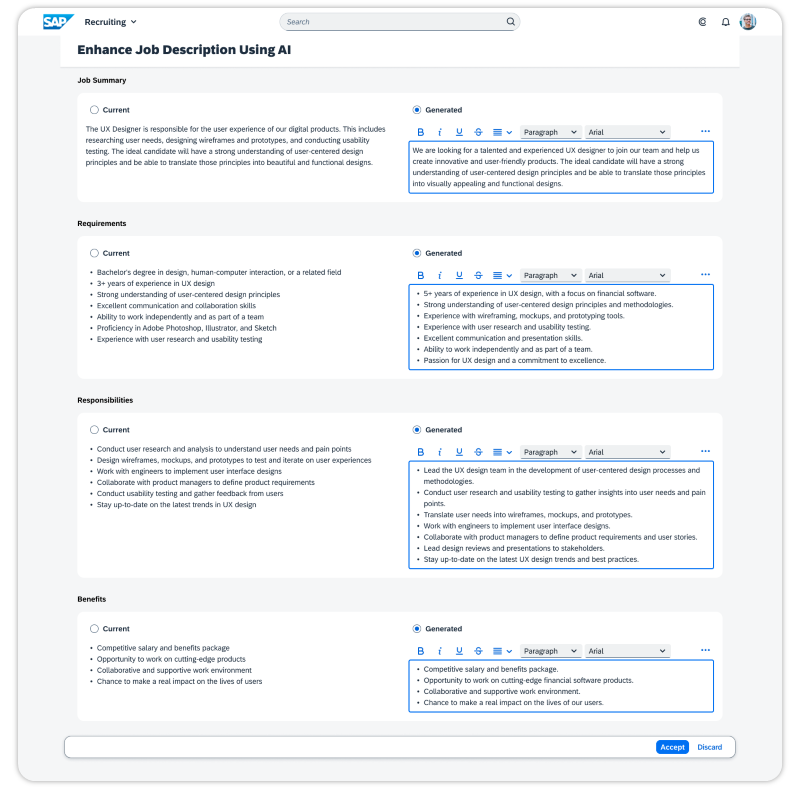
In the recruitment module, artificial intelligence supports the HR specialist and manager in preparing the job description so that it is both comprehensive and attractive to candidates. Thanks to integration with Azure OpenAI Service, the requirements for a role can be adjusted according to AI suggestions and then published in SF.
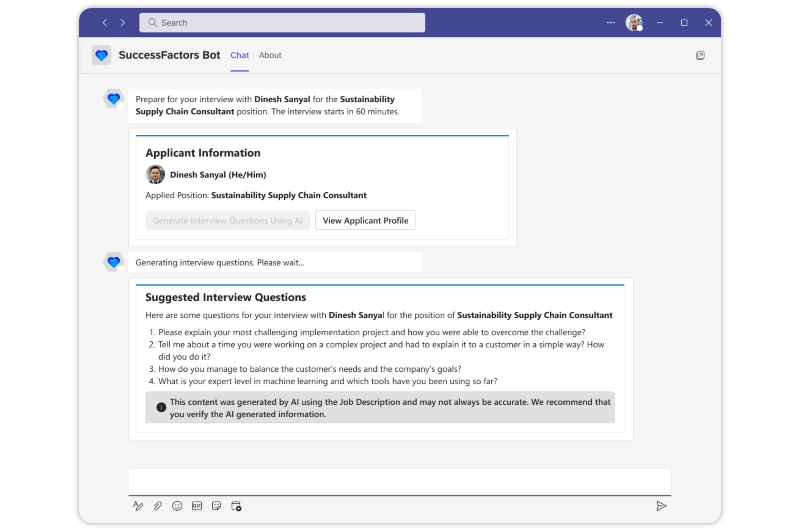
Generative artificial intelligence also supports recruiters and managers during meetings with candidates, suggesting questions based on role descriptions and CVs (with language inclusivity prioritized). SF integration with Microsoft Teams is used here.
Predictive artificial intelligence
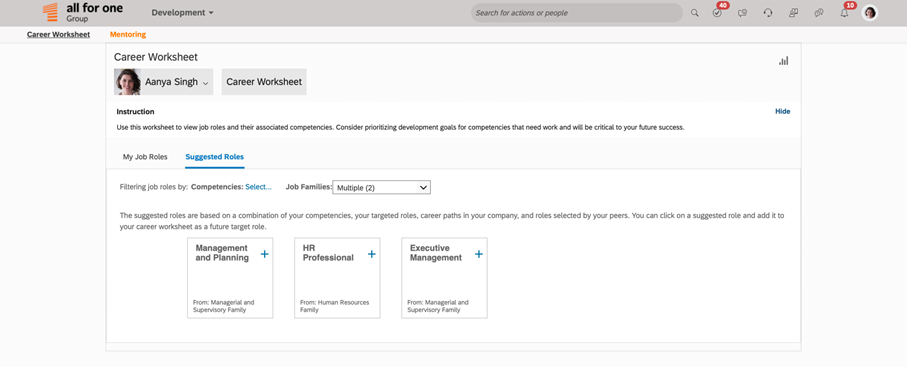
Machine learning is used, for instance, to recommend career paths to users. Proposed roles are suggested on the basis of career paths of similar people (competencies, aptitudes, preferences, history in the organization…).
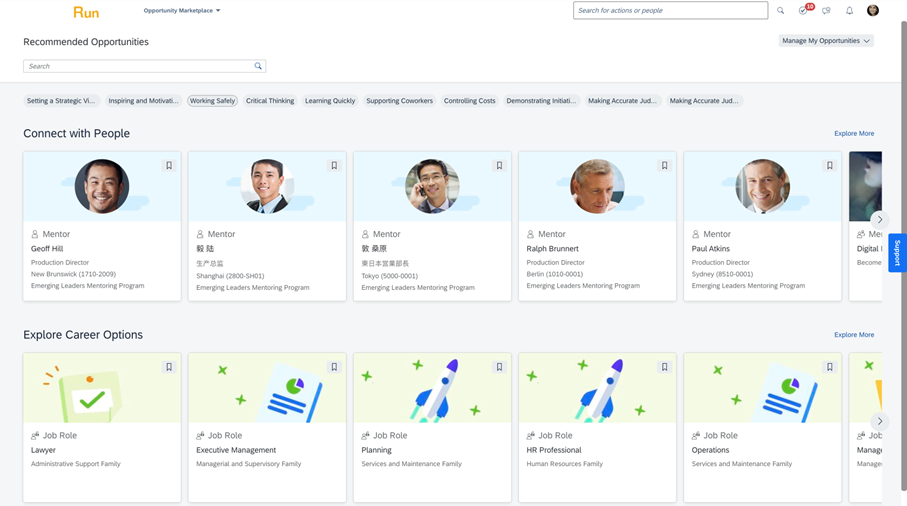
In the Opportunity Marketplace module, machine learning provides users with recommendations for training, roles, and assignments (such as internal projects or dynamic teams).
Job Analyzer, a tool available in SF Recruiting, helps formulate job descriptions in a way that avoids gender discrimination and ensures that the salary offer is optimized based on industry standards and the job location. Machine learning is also used here.
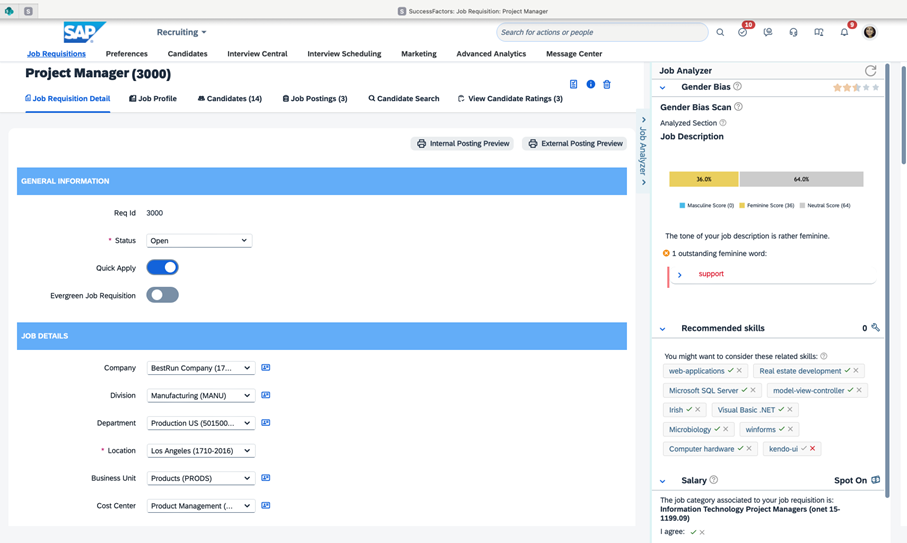
SAP announces further applications of AI in SuccessFactors solutions, related to further development of Joule, defining development goals or building dynamic teams, among others. AI implementation is an organic process requiring monitoring and control due to a number of risks associated with artificial intelligence.
Responsible development of artificial intelligence
SAP is committed to ensuring that AI applications in SF solutions are ethical, reliable and guarantee confidentiality. To this end, an ethics policy document has been created and guiding principles defined for the creation and development of artificial intelligence. As early as 2018, SAP established the AI Ethics Advisory Panel, an external organization bringing together experts from the worlds of science and business (including Stanford University, Georgetown University, University of Pretoria, and ICANN).
The use of artificial intelligence (especially generative intelligence) is subject to risks (concerning such aspects as hallucinations, quality of training, bias of results, intellectual property). Before development work is commenced, each risk is reviewed by the SAP AI Global Ethics Steering Committee.