


Since July 2011, the SAP systems environment of the coffee giant has been maintained and administered by consultants of the BCC Outsourcing Center (currently All for One Poland). Strauss Cafe’s SAP users work on the systems, which are physically located in BCC’s data processing center in Złotniki near Poznań, while BCC specialists take care of the stable and efficient operation of the ERP system environment, the data warehouse and the EDI infrastructure connected with them. In addition, SAP application consultants from BCC’s service organization are at Strauss Cafe’s permanent disposal. As part of the service application service they remotely support SAP users at Strauss Cafe in their daily work with the system.
“For us, such a broad outsourcing relationship with BCC means a clear division of roles in matters related to the SAP system. We, as a customer, simply use the system, and we expect our supplier to make it available according to the agreed SLA terms. Performing day-to-day administrative tasks related to reviewing logs, parameterization, ensuring the efficiency of the systems, or guaranteeing the patency of EDI services that are very important for our business – for example, orders from customers come to us via this route – are within the scope of BCC’s responsibilities. We operate within the framework of procedures developed over the years and constantly adapted to the current needs, and part of the SLA contract are also guarantees regarding security copies of systems, restoration to a point in time in case of failure, or testing of Business Continuity Plans (PCD). Thanks to the fact that BCC also provides us with SAP application service, we don’t have to wonder where to direct a problem related to the SAP environment – we always have a single point of contact for SAP issues, and we don’t have to wonder if it’s an administrative or application issue," says Adrian Kurlit, IT Manager at Strauss Cafe.
Such a support model, in which on the outsourcer’s side is both the provision of the hardware platform, administration of the SAP environment and remote user support, can be called “100% outsourcing." It actually differs from the SaaS (Software as a Service) model only in that the customer is the formal owner of the SAP software license.
“We took as long as ten years to reach the current model of cooperation. Why so long? You could say that we as a company matured, gradually appreciating the advantages of outsourcing. But the market of service providers also matured, encouraging us to make more decisions in this area," Adrian Kurlit adds.
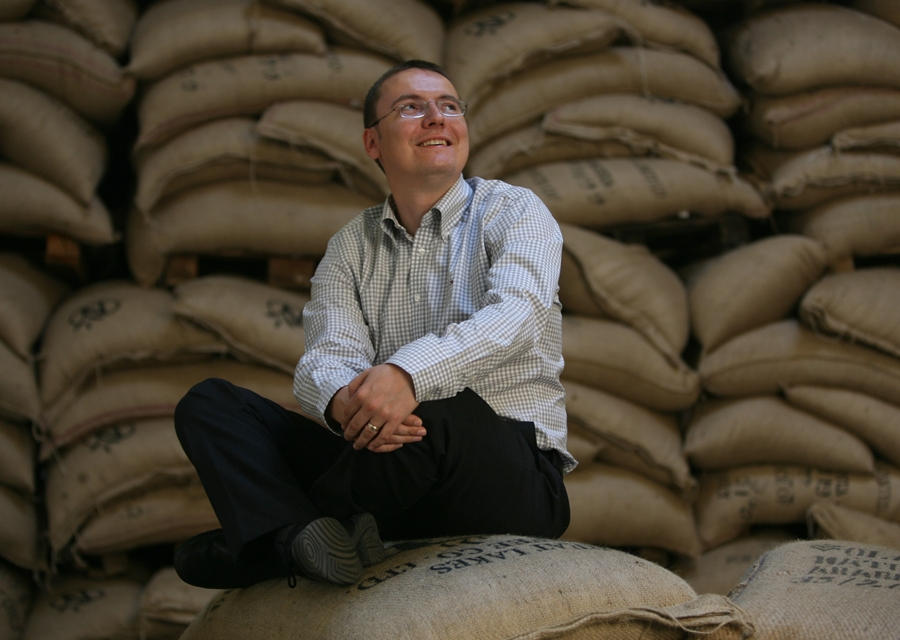
Adrian Kurlit, IT Manager at Strauss Cafe
We have devoted considerable attention to refining the SLA provisions in the hosting agreement, making sure that it meets our needs – those of today and those that will arise in the foreseeable future
Outsourcing wasn’t built in an instant…
Strauss Café, still under its previous name – Elite Café, started working on the SAP system in January 2001. The implementation of SAP ERP as well as the development in the following years with further functionalities (including SAP HR, SAP Warehouse Management, SAP Customer Service, SAP Business Warehouse) was carried out with BCC (currently All for One Poland). Initially, in addition to permanent implementation cooperation, in 2004 the company decided to purchase application service – remote support for SAP users in BCC.
Unlike many companies currently choosing to implement SAP, the company decided to build its own competence in system administration. “Now the thought of using SAP in an outsourcing model seems natural and is considered by almost every company starting an SAP project. However, a dozen years ago the IT outsourcing market was at a completely different stage," recalls Jaroslaw Skąpski, CFO of Strauss Cafe. “We were aware, however, that there was no point in knowing everything that had to do with system administration, so soon after the start of SAP we started to take advantage of permanent expert support in system administration."
For three years, the Strauss Cafe SAP system was administered by an internal team of specialists. BCC’s administration support consisted, among other things, of performing system reviews, i.e. monitoring the functioning of the infrastructure at the application, database, and operating system levels. In addition, administrators were able to take advantage of BCC’s remote support for solving ongoing administrative problems, within a fixed pool of hours per month, and regular SAP Basis consultations at Strauss’ headquarters.
Over time, however, this solution began to fall short. In June 2004. Strauss Cafe decided to switch to outsourcing SAP administration. The decision was dictated not only by the potential cost of training and maintaining new staff, but also by awareness of the competitiveness of the labor market in this area. From then on, responsibility for administration of the SAP environment was transferred to BCC. In this way, the company simultaneously received permanent access to the constantly improving competence of BCC’s technical consultants.
From the point of view of IT managers, the use of such a cooperation model allowed to ensure greater stability of the administration service – having an in-house administrator carries the risk of his unplanned unavailability, specific working hours and physical capacity to perform a certain number of tasks. Outsourcing the administration changed the model of service assurance for SAP systems: previously the SLA terms were based on an employer-employee relationship, but have since been based on a contract between Strauss and BCC.
It is worth noting that while raising the quality of the administration’s service, its costs, calculated in the TCO (Total Cost of Ownership) model, have not been increased.
Jaroslaw Skąpski: “When considering outsourcing administration, many companies compare the monthly cost of the outsourcer’s service with the monthly salary cost of an internal employee. Meanwhile, there is much more to the cost of internal service – such as the cost of training and replacements. From this point of view, in our case, outsourcing the administration was doubly beneficial – both because of the quality of the service and because of the cost."
The final step
The next step was the SAP hosting contract, which was signed in July 2011.
When asked why the company decided to do so at that time, Adrian Kurlit replies, “Over the following years we collected positive experiences from outsourcing, not only in the SAP area, by the way. Acceptance of such a model of operation was growing in the company. The prospect of SAP hosting was becoming more and more natural for us. At some point, we were faced with a choice that every company periodically makes as its hardware ages: whether to make a large investment in new IT infrastructure and servers for SAP, or to opt for hosting."
Very often the impetus for the decision to start using outsourcing services is, in addition to a positive attitude towards buying services “outside", specific business events. This can be, for example, the just ending maintenance for the existing IT platform, the exhaustion of its expansion capabilities, the departure of employees who possessed specific competencies, organizational or ownership changes that translate into the need to merge the companies’ systems or separate the system for a new entity emerging as a result of business development.
Regardless of the ultimate reason, the assessment of the benefits of such a turnaround is similar everywhere.

Jaroslaw Skąpski, Chief Financial Officer, Strauss Cafe
It is much easier to plan IT costs rationally with a fixed monthly fee for a well-defined range of services. We do not run the risk of overinvesting or underinvesting
“Comprehensive SAP outsourcing is the most economically advantageous solution for us. One trustworthy partner is responsible for ensuring our availability and security of the most important system in the company, manages it and supports its users. For a fixed fee, we benefit from an efficient hardware platform and the technical and application knowledge of BCC specialists. In the SAP area, we do not have to invest in our own IT infrastructure and incur the costs of maintaining and developing competencies." – concludes Jarosław Skąpski and, as CFO, adds, “It is much easier to plan IT costs rationally with a fixed monthly fee for a well-defined range of services. We don’t run the risk of overinvesting or underinvesting."
Adrian Kurlit emphasizes: “It’s fair to say that sooner or later every company has to answer the question of whether it’s worth expanding internal services in all areas of the company, or whether it’s better to focus on core business, handling the rest with SLAs. At the same time, the IT head also has to consider whether he wants to be a “local IT guy" or a manager, managing the company’s IT area and creating new solutions for the benefit of the company. While still remaining responsible for providing employees with good quality IT services, he must make the best choices based on his own knowledge and market experience."
A difficult choice
Choosing a hosting provider is not a simple decision. Good practices include evaluation of the outsourcer’s organization and experience (including the number of contracts handled, period of operation in the market, implemented labor and security standards), the team (the size and qualifications of the team of employees who will execute the contract), and analysis of the proposed shape of the contract (the degree of detail of the provisions, the proposed SLA, the prospects for development, and the possibility of its modification and adaptation to changing needs).
Properly defined SLA parameters give the customer confidence that their system will be secure and available. The better they are defined and clarified during the contract negotiation, the better the matching of the service to the customer’s requirements, and consequently, the implementation of the contract proceeds without conflicts and in a partnership atmosphere.
Strauss Cafe, because of its long-standing cooperation with BCC (currently All for One Poland) in SAP administration, had a somewhat easier choice.
“We have found that a properly prepared team of consultants and the high quality of organizational solutions at BCC have made our cooperation run without significant disruptions over the years. However, regardless of this, we have paid a lot of attention to refining the SLA provisions in the hosting agreement, making sure that it meets our needs – those of today and those that will emerge in the foreseeable future. Even if the scale of our business increases significantly, the effect is supposed to be the same – the system is supposed to work reliably so that we can take care of what is the core of our business. If I were to advise anything to other IT Heads who will be negotiating SLAs, the most important thing is that the contract should include all the issues that are important to us. Do not leave presumptions, verbal agreements, etc. It is also worth considering whether the agreement is sufficiently flexible – whether it is prepared for possible acquisitions or reductions. Particular attention should be paid to all kinds of definitions (parameters, formulas) – all components must be clear and understandable to us before signing the contract." – Adrian Kurlit concludes.
New challenges for the IT department
The migration of SAP systems from an in-house server room to a professional data center partially changes the way IT works. In this area, responsibilities shift from administrative to developmental. The IT head can devote more time to the development of IT services in the company and focus more on proposing rationalizations for the “internal customer."
When asked how work in the IT department has changed, Adrian Kurlit answers: “Although we have handed over the last SAP-related tasks to BCC specialists, we do not have less work. Issues related to ensuring proper backups and adequate hardware infrastructure (warranties, performance) have disappeared from my “task list", while network issues have gained critical priority. These need to be as reliable as possible and tested regularly to ensure uninterrupted operation of our key system running in a remote location. In addition, we have just started an SAP upgrade project, which also involves our employees’ time."