

The years 2009-2011 at Animeks were marked by major business and IT projects. The first to take off was the SAP HR solution implementation project. Secondly, a separate project was launched to implement the system SAP ERP. Following the launch of the latter solution at the Warsaw headquarters and the plant in Morliny, roll-outs of the solution to other companies are currently underway. So it looks like for another year the company’s sizable resources will be involved in additional project work in addition to ongoing business tasks.
Such a large organizational effort and the change in management associated with the new tools were among the primary reasons for separating these projects at ANIMEX and implementing them on different schedules, under different management. Animeks’ implementation partner in both of these projects was BCC (now All for One Poland).
The SAP HR project has already been summarized and evaluated – to a medal.
The very good evaluation given to both the solution itself and the way the project work was carried out did not come only from the project participants and beneficiaries of the solution. The project to implement SAP HR in Animex Group was a winner in the 2011 Project of the Year competition, organized by the Polish branch of the Project Management Institute (PMI), an internationally recognized professional non-profit association in the field of project management.
On time, on budget, on scope
As Robert T. Zelewski, Managing Director for HR at Animex Group, points out, “From the beginning, the implementation of SAP HR was strongly related to the business project of reorganizing and unifying the way the company’s HR and payroll areas were managed. This is no small undertaking, also in terms of organization, as the change was to ultimately cover more than 8,000 employees in 16 companies and the Warsaw headquarters. Of course, once we decided on the project, we were keen to get the solution up and running as soon as possible, but the scale of the changes and security concerns led us to divide the implementation into stages."
As a first step, a pilot project was conducted at three selected group companies: Poultry Group Headquarters, Ilawa Production Plant and Raw Material Group. Their choice was well thought out. The HR service of these three companies takes place in one location. This not only reduced logistics costs, but was also a significant organizational convenience in building a system template for the capital group.
The purpose of the pilot implementation was not only to launch the system in selected companies, but at the same time to prepare a model that was to be rapidly transferred to other units. The construction of the system on the basis of the experience of three companies, with the participation of people from other units, significantly influenced the comprehensiveness of the solution and the smooth execution of subsequent rollout phases. This minimized the need to expand the scope of the project planned at the beginning.
The scope of the model included the so-called hard components of the SAP HR system, necessary for the implementation of basic HR and payroll processes in the organization (Organization Management, HR Administration, Payroll Settlement, Time Management, HR Corporate Reporting). Consistently limited the number of modifications and extensions to the system through additional applications, seeking standard solutions within the available SAP HR functionalities. This approach allowed the project budget and schedule to be kept in check.
However, even with such rigorous assumptions, the schedule in which the project was planned seemed very tight – the first project meetings were held in September 2009, and a productive start was made as early as February 1, 2010. In these just five months, a model solution was prepared, tested and launched.
After the support phase was completed and the system stabilized, rollouts began after a few months. The work was divided into a further four stages, each of which launched the system at three to four group companies (depending on their size). The last stage, covering plants in Krakow, Grodkow, Zamosc and Debica, ended in December 2011.
Both the pilot project and subsequent roll-outs were implemented in accordance with the All for One Go Forward project methodology, based on PMI best practices codified in the Project Management Body of Knowledge (PMBOK).
Currently, the SAP HR system handles HR and payroll for Animex’s 8,000 employees.
Improvement in unification
The primary objective of the project was to launch a modern IT system in the company, supporting the area of human resources management. Among the most important benefits associated with the use of SAP HR, the first to be mentioned is the improvement of work organization thanks to the unification of HR and payroll processes throughout the group.
Replacing old, unstable HR and payroll applications with a single, consistent system for the entire group has allowed the automation of HR administration processes and the elimination of some paper documents. This also translates into savings from maintaining the competencies associated with operating the system within the group and facilitates employee mobility within the Group.
After the implementation of SAP HR in all units, full automation of the payroll process (including retroactive billing) was achieved. Now all employees receive salaries calculated according to the same rules. To this end, the group’s catalog of salary components was revised. It was unified and simplified. Where possible, plant-specific components were replaced with others common to the group.
For example, one plant had an hourly rate for selected employees. An analysis showed the lack of added value of such a model and it was changed to the Group’s current monthly rate. While this required renegotiation with the unions and the signing of new contracts with employees, it was recognized in ANIMEX management that the overriding benefit was to make the group’s payroll rules more consistent.
Legal and data security
One system in the group opens up previously unavailable possibilities for comparing selected data of production plants or selected units, down to the level of individual employees.
An important rationale for choosing SAP HR was also the system manufacturer’s guaranteed support for adapting the system to changing legislation. SAP’s monthly updates take into account legislative changes and include new HR functionalities. This was not provided by the previously used applications and the area of security was of great concern within the group.
This is particularly important for a company that is part of the US-based Smithfield Foods group, the world’s largest producer of meat and processed pork products. Internal corporate policies, also dictated by the SOX Act, place high demands on the organization’s data security and internal controls.
A common group-wide HR and payroll system also means reducing the cost of maintaining systems and developing employee competence. After the initial period, when end-users are already well acquainted with the solution and the principles of working with it, management expects to reduce the workload of HR departments in carrying out basic HR and payroll processes and free up resources to build better, more effective HR policies, including those based on SAP HR soft tools.
The integration of the SAP HR solution with the SAP ERP system, which is being launched in the group, guarantees the implementation of all the company’s business processes in a single, consistent IT solution.
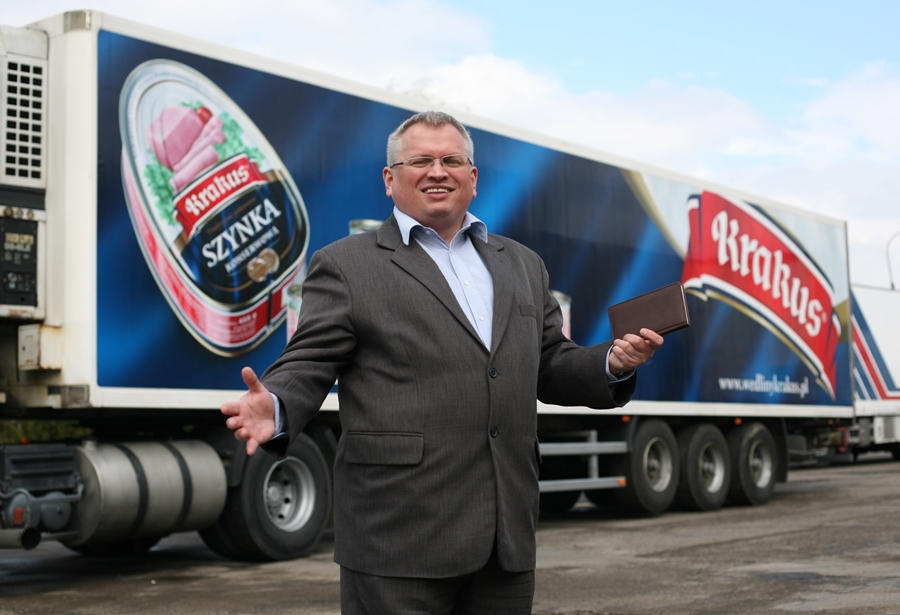
Robert Zelewski, Managing Director of HR, Animex Group
New opportunities for employee development
For ANIMEX, employee development is part of our corporate culture and a daily practice. We invest in human capital, conduct a lot of training for employees and take care to provide them with professional development opportunities. As an appreciation of our work, we received the prestigious Investor in Human Capital award, and we are the best in our industry in this regard.
The SAP HR System, which is now used by all group companies, opens up new possibilities for us in this field. Unified management of the HR and payroll area, unification of processes across all companies and better global reporting capabilities certainly have a positive impact on our operational efficiency.
In the future, we plan to further develop the application of SAP HR unified software capabilities in our group. We will focus on using the system to build training and employee development plans. We also want to build coherent incentive systems more effectively and develop other functions important in modern HR management in the area of so-called soft HR.
In preparing for the implementation project, we relied on simple and effective principles: detailed planning, in which risk analysis was also very important; good preparation, selection of people for the project, as well as their motivation and consultation with everyone involved at every stage. This resulted not only in the success of the project, but also found recognition from the professionals of the Project Management Institute.
The first prize in the PMI competition was received by project manager Kamila Wilanowska. As is often the case, success has one face, but it is the collective success of all Animex employees involved in the implementation of SAP HR. I would like to take this opportunity to thank everyone once again for their commitment and congratulate them.
Robert Zelewski, Managing Director of HR, Animex Group
How to manage the Project of the Year
During the Congress Gala on October 4, 2011, awards were presented in the prestigious 2010 Project of the Year competition organized by the PMI Poland Chapter. From among a dozen entries, the winner was selected: “Implementation of the SAP HR system at Animex". We talk about the management of this exemplary implementation project with Kamila Wilanowska, SAP HR project manager on behalf of Animex, and Michal Szymaczek, project manager on behalf of BCC.
An IT project with a partner-consulting firm is characterized by the fact that there are two heads: on the part of the client company and the implementation company. How does this affect the management of the entire project?
Michal Szymaczek: The model of two project managers in SAP HR implementation has worked well for many years. Both the implementation company and the client should choose people for these roles who are effective in communication, focus on finding solutions and are not toxic leaders. I think that in the project for Animex we achieved a synergy effect – combining the project experience of BCC (currently All for One Poland) with the client’s organizational culture and subject matter expertise in HR processes.
Kamila and I are pragmatists – we have a common goal of completing planned tasks according to budget and time targets, and we focus on that. In summary, the model of two managers working together to come up with solutions and overcome challenges works perfectly at Animeks.
Communication was given great importance in the project. This, by the way, is in line with the recommendations of the All for One Go Forward project methodology. What did it look like in practice?
Kamila Wilanowska: This complex project involved dozens of people, with varying degrees of involvement, playing very different roles in the project – from the project sponsor, who was the HR Director at Animex Group, to the task consultant or end user. All of them were recipients of information and sooner or later – according to their status and tasks – sent messages to all or only selected people.
The formal communication plan we prepared at the beginning of the project (who reports to whom, when and whom to inform, in what situations, in advance, through what channels and in how much detail) set the standards and really formed the basis of the teamwork.
For example, at the end of each phase of the project, we reported the status of implementation to the Steering Committee, but to be able to do so, we first collected sub-reports from lead consultants and work team leaders. In most cases, we used ready-made forms provided by BCC. SharePoint also played a huge role in the communication process, as it was a hub of knowledge and information for us, e.g. about the schedule or other documents developed during meetings.
On occasions such as awards galas, it is usually emphasized that the project is the people and success is due to them. How much courtesy is there in that?
M.S.: In the case of ANIMEX, the title of Project of the Year is a completely deserved award for the team. There are projects where the client’s involvement is far from perfect and the success is more due to the consultants, but in this case everyone earned the award. It is not enough to select the best people for a project, you also need to provide them with the right environment and working conditions to keep their motivation at the highest level.
Animex showed an exemplary approach here – the project manager was delegated 100% to the venture, other team members were relieved of some of the tasks, additional funds were set aside for an incentive fund. Not without significance was the involvement of the project sponsor – Robert Zelewski, HR Director – who was an invaluable coach to his people.
In building the project teams, Animex delegated to them people with high HR competencies and teamwork skills. Representatives of other companies, not included in the first stage of implementation, participated in the project in order to include the specifics of the other units of the group in the solution concept. So it was quite a large group, and both at this stage and in the roll-outs, knowledge transfer and clear division of roles were crucial. This expansion of the team working on the concept later had a very positive impact on the speed and organization of implementations in subsequent companies.
The team got a clear message about the importance of the project to the organization and the support of the company’s top management. This message was followed by concrete benefits – like the bonus fund already mentioned, which the HR Director had at his disposal.
Despite a really busy schedule, we also found time for several team-building meetings. I think that the fact that after a day of intensive work on the project the participants still feel like meeting informally is a testament to their high commitment and positive approach to the project.
What were your biggest challenges during the project? How did you deal with them?
M.S.: The challenge was certainly the scope and timing. We were running not only an IT project, but also a business project. The HR model being created had to take into account the specifics of many Animex Group companies, including those where the system was to be launched in the future. We had to analyze the business processes of various organizations and unify the HR solution model.
In creating the target solution, we had to keep in mind the need to take into account the requirements of the Sarbanes-Oxley Act (SOX) – Animex is part of the Smithfield Foods group of companies, listed on the US stock exchange. We worked with a geographically dispersed team. All of this together in a limited amount of time required detailed preparation. We planned every day of the project, made logistical reservations in advance and monitored the execution of the plan. Success is twofold – customer satisfaction and a prestigious award.
K.W.: In addition to those mentioned by Michal, the challenge was to coordinate our work with the work carried out in another parallel project – the implementation of the SAP ERP system at Animex Group. The HR system is not an isolated island – the interfaces, method of accounting and exchange of source data had to be agreed upon. Another challenge was the different systems from which we migrated data.
In retrospect, I judge that the key to these challenges was planning. If you have each day planned in advance and monitor the work, you minimize the risk of missing deadlines. The schedule set at the outset included monitoring and risk analysis sessions, and “lessons learned" meetings were held, influencing how to carry out further work.
As a best practice, I can recommend planning each project day several months ahead. In our project, every member of the team knew when, where and on what topic each meeting they should attend would be. It turns out that simple tools such as Outlook, SharePoint and a spreadsheet are enough to effectively plan and monitor project work.
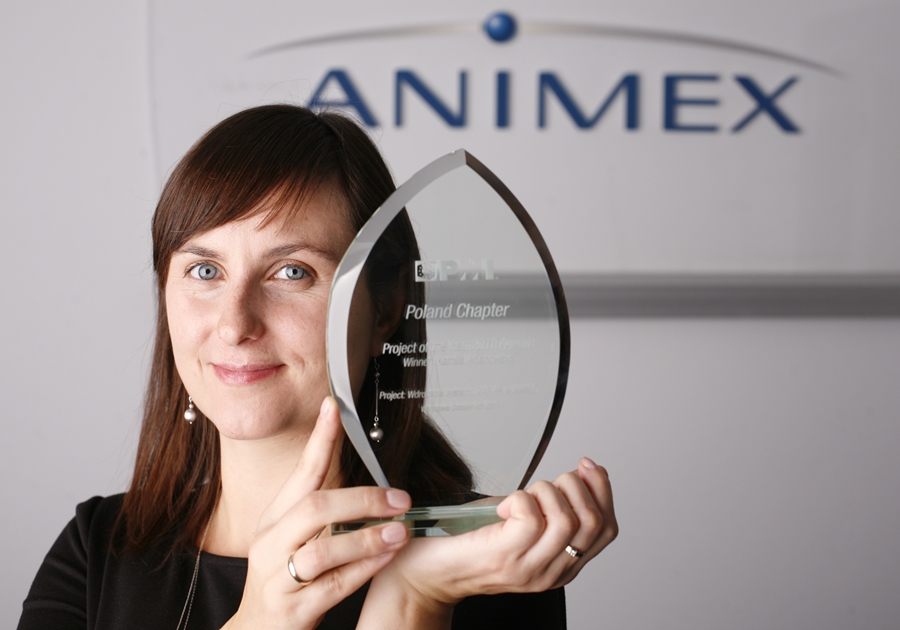
Kamila Wilanowska, SAP HR Implementation Project Manager, Animex Group
How did you manage risk in the project?
K.W.:Risk management is a bit like playing devil’s advocate. You have to think up and write down everything that can happen, that can go wrong, that can positively affect the project, and develop procedures on how to counteract negative risks or how to create conditions for positive events to occur.
The risks we describe in a project risk factor report are most often not spectacular threats, leading to a project disaster. For the most part, they are minor events that just might happen, such as the illness or unplanned departure of a project team member, data migration errors or server unavailability during a key period.
With the project schedule planned down to the day – as it was in our case – for each of these potential events we had to have a predetermined plan B: what determines the activation of the emergency procedure and how to carry it out. It is said that “if you don’t attack the risk, it will attack you."
We used the standards defined in the All for One Go Forward methodology. Risk factor reports resulting in risk rankings facilitated our work.
Documents, forms, manuals, reports…. It seems that the job of a project manager is a lot of paperwork.
M.S.: Some amount of such work is necessary – the weakest ink is stronger than the best memory. When choosing documentation standards from project methodology resources, we use common sense. During the project preparation phase, managers decide what documentation is mandatory and with what frequency it should be created or updated. Necessary minimums are always consultation protocols, concept document, meeting schedule, risk factor report, test scenarios and forms, and phase acceptance protocols. We also used selected features of the project portal repository and MS Project, but I rate the importance of these tools as secondary.
PMBOK is the global standard for project management. What direct guidelines of it were used in this project?
M.S.: We didn’t discover anything new in the project – the Go Forward methodology is based on PMBOK standards. In particular, we paid a lot of attention to risk analysis, lessons learned sessions, formalized change management and motivating the project team, described quite well in PMBOK. Among the key tips, I would choose these: define achievable and measurable goals; select the best people and motivate them accordingly; plan the work and monitor progress; remember that one of the most important things is communication – manage it with special attention.
There is no ready recipe for project success, just as there are no recipes for personal success. Instead, there are methods to minimize the risk of failure. Using a methodology based on PMBOK standards brings order to a project, allows you to embrace its complexity and avoid chaos. Without methodologies, we would be managers struggling on Monday morning to overcome the challenges of the day, instead of working on next Monday.
What does it mean to standardize processes? What criteria determined that a particular solution was chosen as a model for the group?
K.W.: The group includes many plants with different histories, bylaws or collective bargaining agreements. In addition, most of them had their own IT solutions. Effective corporate reporting in such a situation was very difficult or even impossible. We selected a few units where HR processes were most similar to what we envisioned in the model, and this was our benchmark. The basic criteria for selection were a high rating of the HR processes in place, the relative representativeness of the production and motivation to change the IT system, and the support of the management. Life has shown that this was the right choice. Examples of model solutions were, for example, bonus systems or the way of settling salaries – the division into white-collar and blue-collar workers with flat rates.
Didn’t such a large scope of changes arouse objections from employees of individual companies, accustomed to certain well-trodden paths?
K.W.: From the beginning, we communicated that the SAP HR project was not just the implementation of a new IT tool. The system is only a means to achieve the overarching goal, which was an organizational change aimed at increasing work efficiency and modernizing HR management in the company.
HR managers from all group companies participated in the conceptual work when we created the template. Together we discussed changes, set assumptions and worked out compromises. We wanted the developed model to find acceptance and understanding among future users. Besides, nothing is impossible for a person who doesn’t have to do it – it is only by participating in the project that one can understand its limitations.
No one likes change that they don’t understand or that complicates their lives. However, in this case, experienced HR professionals themselves have said more than once: our old system is severely limiting us, we know that certain processes can be done better.
Finally, we must all keep in mind the hierarchy of the capital group. Although individual companies enjoy considerable autonomy in their management, including human capital, we are all part of Animex. It is impossible to have an effective human resources policy without consistent and uniform rules.
In addition to meat and sausage production, Animeks also has specialized distribution, feed or feathering companies. However, in view of the different business models, weren’t some concessions and consideration of differences from the model necessary?
K.W.: The only differences we decided on were not in the HR and payroll model – that was consistent across the group. The differences were in the incentive systems or in the way some components of working time were calculated. This was solely due to different provisions in regulations or collective bargaining agreements.
However, there were relatively few such cases.
How is the management and administration of SAP HR solved in the company?
K.W.: System administration is on the side of ANIMEX. BCC supports us as part of the application service on issues requiring Basis and HR expertise. In the company, we have an HR administrator acting as an internal consultant who communicates with the users on the one hand and with BCC on the other.
Such a model, in which we develop part of SAP and IT competencies in-house, and in part we rely on the knowledge and experience of BCC (currently All for One Poland), works well for several reasons. Firstly, we have a person at home who filters requests from different organizational units and coordinates work on them, and secondly, in such a large organization we want to have an internal advisor with high SAP competence, which makes it easier for us to define and implement the system development strategy.
What would you advise newly minted project managers who face a similar challenge – managing a large implementation project at a company?
K.W.: Time has shown that carrying out such a project, which deals with a huge target group and has such important business goals, changing the company, is not easy. One needs to know how to plan, manage risk, change and the team. All these skills can be possessed, but the most important thing is to be responsible, decisive, and often courageous in pursuing such projects. Last, but not least, the last qualities are patience and perseverance – after all, there is nothing worse than straw enthusiasm in running long-term projects.
Interviewed by Miroslawa Huk