

In complex IT environments, where the number of dependencies between the systems that make up the IT infrastructure can give you a headache, any need for change presents a significant challenge. A good example is a project to migrate to a new hardware platform. From the jigsaw puzzle of IT systems supporting different business sectors, the optimal “puzzle" of the migration course has to be put together. The goal is to have as little disruption to the ongoing business as possible during the project (optimally, when the ongoing project is fully transparent to the business), while maximizing the benefit, which can be felt on both the business and IT administration sides, once the project is completed.
Migration – where to?
Amica Wronki’s environment relies on virtualization of IT systems. This kind of platform successfully meets the requirements of both small and really large IT systems present in Amica’s environment. The introduction of an intermediary layer between the hardware and the operating system layer and the application layer, which is a virtual platform, has made it possible to obtain many benefits, important for both the business and the administrators of the IT environment. Below we point out the most important ones.

Scalability of environment performance
The virtualization of the IT platform has eliminated the problem of running out of hardware resources responsible for performance, which occurs sooner or later. Performance problems were the most important reason for replacing hardware and migrating the IT system to it. Now Amica has gained the ability to easily expand the computing power of the IT environment, without having to set up an IT system migration project. It is enough to add physical servers to the environment and uninterruptedly migrate systems requiring an increase in allocated resources to them. What’s more – in this way it will be possible to perform a virtually complete replacement of the hardware underlying the virtual environment in the future.
Optimal use of available resources
Insufficient performance of one of the systems is now no longer a pressing problem. Engineers administering IT infrastructure can easily, simply and without requiring a visit from a service technician, allocate more computing power or operating memory resources. To do so, it is enough to tap into the general and foreseen in advance inventory of resources in the environment, or to limit temporarily (e.g. for the time of environment expansion) the resources allocated to less critical systems.
High availability
In a traditional environment, in the event of a major failure of the physical server on which the IT system is running, you have to reckon with its unavailability for the necessary repair, if you don’t have a High-Availability configuration, commonly known as a cluster. In a virtual environment, with appropriately selected resources, even systems that were deployed without considering High-Availability solutions (no redundancy of resources, physical components, cluster solutions) can resume operation almost immediately after a failure occurs and without the delay resulting from the need for a service technician visit. It is enough to run them on the part of the virtual environment that did not fail.
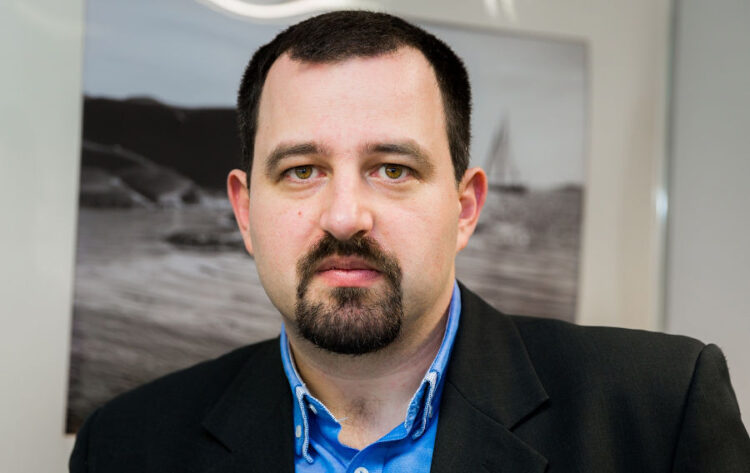
Jerzy Zielinski, Director of the Information Technology Department, InTeco Business Solutions Sp. z o.o.
Virtualization key to scalability
The Amica Wronki Group of Companies has been growing strongly recently. We are working towards consolidation and centralization, but from the IT side we were not prepared for this. Our architecture was not scalable. Therefore, it was the scalability of the new solution based on virtualization that was crucial for us. It was also the first step toward preparing the entire architecture to be secured by building a second data center. Amica Wronki has already been working with SAP for eighteen years, and has been using external support for Basis system administration for fifteen. The choice and implementation of the virtualization solution fit perfectly into the company’s development strategy “HIT 2023", adopted in 2014. Its goal is to optimize infrastructure maintenance costs and secure the company’s ICT operations, including by virtualizing and consolidating all key systems, as well as abandoning the expensive HP-UX platform in favor of x86 technology. In turn, the main benefit of system virtualization is its increased availability and scalability.
Thanks to the implementation and increased scalability of the x86-based infrastructure, our SAP system not only supports the headquarters, but is already running in four of the five largest subsidiaries. These are Amica International GmBH in Germany, Hansa OOO in Russia, GRAM Domestic in Denmark and Amica Electrodomesticos in Spain. Ultimately, business processes in all companies will run on our ERP system, which is virtualized and located in the Wronki data center.
Jerzy Zielinski, Director of the Information Technology Department, InTeco Business Solutions Sp. z o.o.
Easier maintenance of equipment
Uninterruptible change of physical hardware, whose resources are allocated to a virtualized IT system, is a tool that undoubtedly makes life easier for administrators of IT environments.
Upgrading the firmware of a physical server? Replacing a failed component? Expanding the RAM? These tasks have become simple in a virtualized environment. All you have to do is migrate the virtual machines running within a server to another server, shut down the physical server, perform the appropriate procedures, turn it on and re-deploy the resources to support the virtual machines.
All of this is done without reconciling service interruptions and in a way that is completely transparent to system users.
Hand in hand
The project to migrate IT resources to a virtual platform at Amica Wronki was carried out jointly by InTeco Business Solutions and BCC (currently All for One Poland). Consultants from both companies complemented each other’s activities on the various levels of the project.
The migration of SAP systems combined with the change of operating systems and database software versions was carried out by BCC. The target platform of the IT environment at Amica was scaled and prepared by InTeco.
The entire operation proceeded according to schedule. The fully virtual IT environment at Amica was launched in September 2015. The project resulted in an efficient and stable environment for 18 SAP systems and related side IT systems. In addition, the configuration of a backup system for the newly created environment was also performed.
The virtual platform migration project is another example of fruitful cooperation between InTeco and BCC. The two companies cooperate in the process of administering Amica’s hardware and software infrastructure. BCC has been providing SAP administration outsourcing services for many years. During this time, multiple joint or overlapping administrative activities have allowed them to develop effective methods of cooperation, the necessary trust and good mutual contacts, without which the implementation of a project of such a large scale would not have been possible.