

Strauss Cafe Service has for years maintained its leading position in serving the HoReCa market in Poland. Strauss Cafe Service’s extensive distribution network supplies more than 7,000 catering outlets throughout the country. The high standard of customer service implies order fulfillment within 24 hours. In order to provide efficient and timely customer service, the company has maintained small warehouses in its eight field branches, supplied from the central warehouse in Swadzim near Poznan.
HoReCa customer service is a big part of the business, and its efficient organization has been the “apple of the company’s eye" for many years. When, at the turn of 2006/2007, a project was carried out to reorganize and optimize the entire coffee business and to cover the catering business with an integrated system SAP ERP, Strauss Café decided to implement SAP Customer Service functionality for servicing machines (coffee machines and espresso machines) – as one of the first companies in Poland.
Also, the implementation of warehouse functions at Strauss Cafe is done in SAP WM. The primary purpose of its implementation (and the replacement of another warehouse management application) was the gamut of benefits from unifying the company’s IT infrastructure, managing it more easily, and reducing the cost of systems maintenance.
Setting itself the goal of further business optimization, the company sought new opportunities to reduce the cost of customer service, while maintaining the standard of service at a consistently high level. To this end, Strauss Café decided to take a two-pronged action – first, it planned to streamline warehouse operations by launching terminal transactions in SAP. This, in turn, allowed the second step: the reorganization of the procurement process for the catering business and its centralization in the Swadzim warehouse.
Terminal transactions – execution of shipments on scanners
The time of preparing shipments is important, especially in the process of preparing parcel deliveries, i.e. deliveries diversified in terms of assortment, mainly to the order of bars and restaurants (HoReCa). Previously, such deliveries were prepared in individual sales branches (distribution centers) – located closer to the customer. In order for a single warehouse to be able to handle such a large number of parcels, issues related to speed and efficiency of work and, above all, automation of communication with logistics operators were very important. These considerations were the main reason for implementing a new model of warehouse operations.
In mid-2013, the company decided to launch terminal transactions in SAP for processes carried out in the warehouse. The partner for the implementation project – as for all previous SAP implementation projects – was BCC (currently All for One Poland).
The following warehouse functions have been covered by the scanner service:
- admissions from production,
- External admissions (including pallet pooling functionality),
- shifts between storage sites,
- inventory,
- releases (including package releases).
In the case of the release process, transactions were created to group pallets into bulk shipments, as well as to handle loading. Thanks to the use of the scanner work model, it was also possible to create a task queuing system, which is responsible for assigning individual activities to an employee, taking into account priorities.
All terminal transactions were performed based on SAP-supportedITS Mobile technology. Its main feature is direct access from a mobile device (terminal) to an appropriately adapted transaction in the SAP system. By converting the screens to HTML form, it is possible to run them bypassing SAPConsole.
The most important benefits of the improvements are:
- Increasing the efficiency of warehouse workers (especially in the area of parcel shipments),
- Shorter shipment preparation time (from customer order to warehouse release) through: automatic invoice creation triggered directly from the scanner, transfer of data from SAP to the forwarder’s system just after package packing is completed, automatic printing of necessary documents from SAP along with the package label from the forwarder’s system,
- reducing the risk of confusion,
- The ability to remotely schedule warehouse workers.
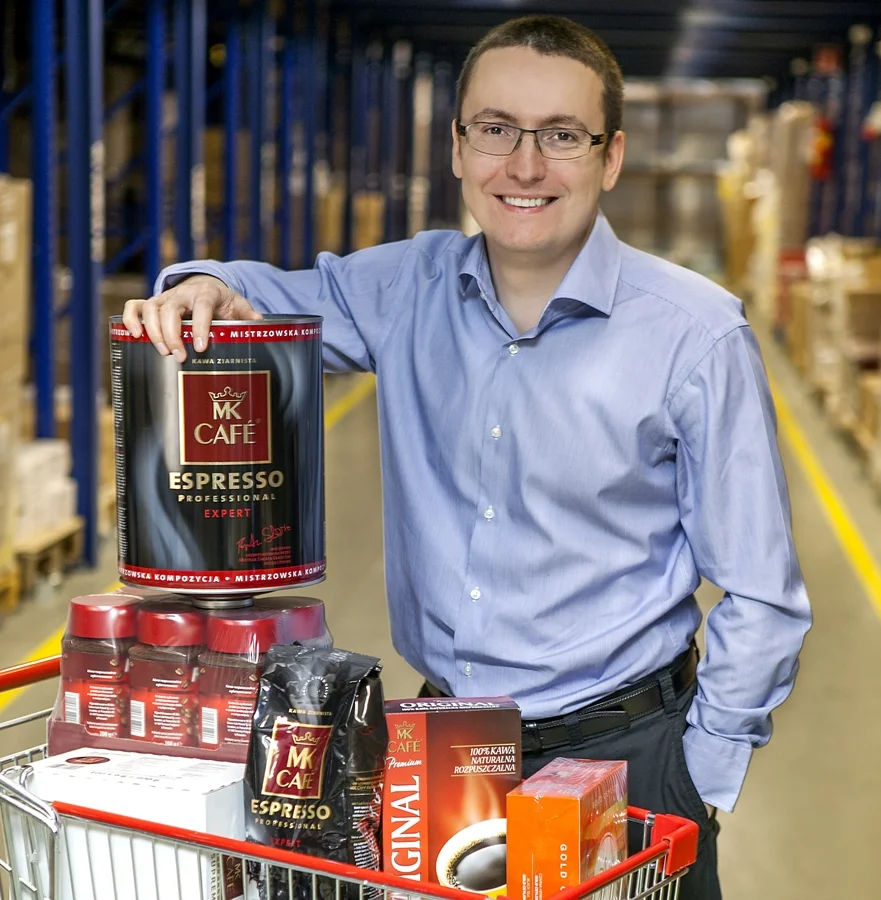
Adrian Kurlit, IT Manager, Strauss Cafe
IT for business
The role of IT in modern companies is to respond to the needs of the business, but also to suggest to the business how modern IT tools can improve their work (initiating changes).
We try to do just that. Implementing a solution based on mobile terminals in the warehouse was another step in the implementation of this strategy. Suffice it to say that the optimization achieved by this project in general made it possible to implement business changes and made the project costs pay off within a few months. And this is not the end of the positive effects. Performance measurement and real-time feedback should give impetus to continuous process improvements.
Another element that magnifies the value of this solution is the integration with the systems of our logistics partners. It is unnoticeable to users during operation, while in relations with partners it avoids misunderstandings and is a valuable negotiating element. Excellent quality and the lowest possible cost of customer service is an important competitive advantage for our company.
Adrian Kurlit, IT Manager, Strauss Cafe
Centralization
Streamlining warehouse operations with scanners was a prelude to changing the business model for servicing HoReCa customers. The company decided to centralize delivery service for all such customers from one warehouse, in Swadzim. The reorganization of this business line involved increasing efficiency in the use of equipment and resources in the central warehouse and reducing costs associated with regional warehouses. Of course, while maintaining an unchanged level of customer service, with delivery of assortments to restaurants and bars within 24 hours.
How do you keep the quality of order fulfillment for a customer unchanged while “moving" the warehouse hundreds of kilometers away from him? The answer lies in shipping. In preparation for the reorganization of customer deliveries, Strauss Cafe has entered into agreements with two leading courier companies – Raben and UPS.
Cooperation with logistics operators
In order to take full advantage of the opportunities for cooperation with logistics operators, new communication channels for pallet shipments were also developed as part of an IT project implemented by BCC. Among other things, the way of informing the forwarder about prepared shipments has been improved, and new label and waybill templates have been prepared.
Thanks to the electronic transmission of data, the forwarder can prepare transport in advance for the collection of supplies from Strauss’ warehouse (he knows how many cars and with what capacity he should substitute), as well as optimally plan the distribution of goods to the end customer.
Once the shipments are ready, labels are automatically printed and waybills are generated. In the contracts, shippers commit to customer delivery times, which in turn requires Strauss to prepare the shipments and send the data to the carrier by a certain time in the day.
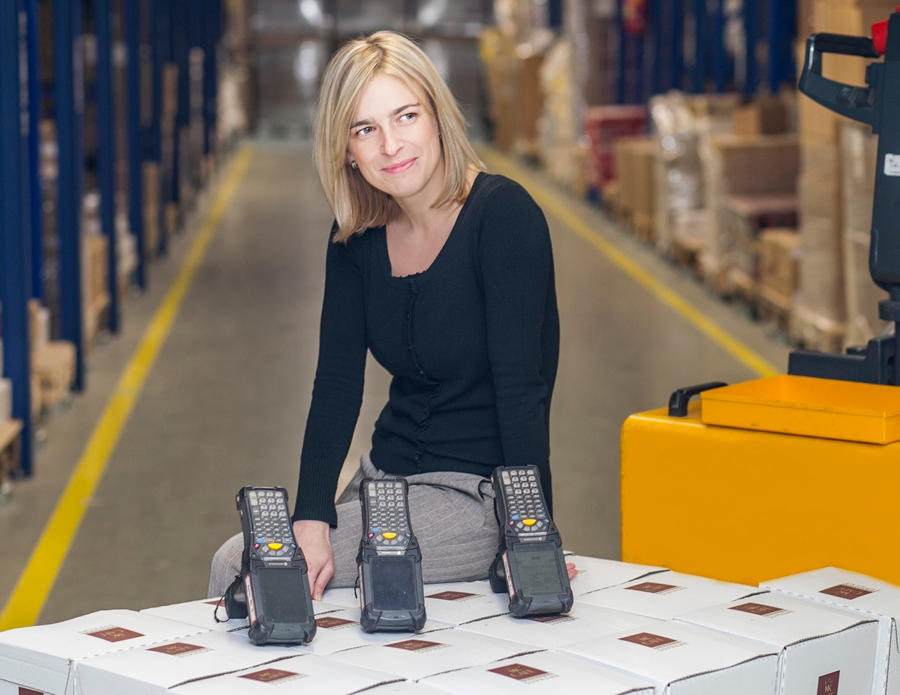
Malgorzata Skrzypczak, IT Systems Analyst, Strauss Cafe
Streamlining warehouse operations with scanners was a prelude to changing the business model for serving HoReCa customers. There was a centralization of delivery service for all such customers from one warehouse.
Measuring work efficiency
After the launch of the new functionalities and the transition to the new work method in the next stage, a solution was prepared to measure work performance. The method of measurement is based on the reference of default completion times for the transfer from location A to location B and the comparison of these times with the times of the actual completion of the order by the employee and the weight transferred.
Performance measurement is performed automatically for activities such as scanning the various stages of processing transfer orders. This makes it possible to achieve second-by-second measurement accuracy.
The collected data is presented in a dedicated report and forms the basis for business decisions related to warehouse efficiency and staffing levels.
The most important benefits Strauss Café has gained from the terminal deployment and carrier integration are:
- Cost reduction, greater business efficiency,
- greater measurability of the system,
- increased productivity,
- Reducing the number of errors in the execution of shipments,
- Better pricing terms with carriers at higher order volumes,
- Higher quality customer service at a lower price.