
SAP LeanIX | SAP Enterprise Architecture Management

SAP LeanIX

SAP Enterprise Architecture Management (EAM)

Full control over the complex IT landscape

SAP LeanIX is an Enterprise Architecture Management tool that from 2023. is part of SAP’s portfolio of solutions to support digital transformation. Subscribed to a SaaS model, it provides full transparency of applications, IT components, data and dependencies or business processes. According to Gartner’s 2024 report. is a leader in EAM solutions.

The increasing complexity of IT environments, the pressure to optimize costs, and the need to ensure compliance and security are causing organizations to increasingly turn to Enterprise Architecture Management (EAM) tools. One of the leading solutions in this category is SAP LeanIX, a cloud platform that allows for full visibility of the application portfolio, assessment of technology risks and informed decision-making for digital transformation. It’s a tool that connects the business and IT worlds.

More than 80 percent. business leaders expect artificial intelligence to bring significant revenue growth in the coming years, but only 3 percent. The CIO shares this enthusiasm. The differences in the perception of technology show the importance of the role of the enterprise architect, who, using various tools, builds a bridge between the IT and business worlds.

The most common challenges cited by those responsible for building an enterprise IT architecture include:

  • The high cost of technology debt – up to 40% of the IT budget is spent on servicing it;
  • Security risks – 56% of system outages originate from security incidents;
  • Inefficient use of subscriptions – as much as 40% of spending is “burned” on redundant applications with overlapping functions;
  • Lack of transparency – only 30% of organizations can indicate exactly how they spend their cloud budget;
  • Long decision-making time – more than half of IT architecture decisions take more than a month to make, a barrier in a world that demands agility.

As many as 64 percent. organizations say they have increased spending on enterprise architecture over the past two years. However, only 14 percent. Enterprise IT architects are seen as close partners for the business.

And how is IT spending spent? Companies say they are spending 5 percent on digital initiatives. of its revenues, 2/3 of which generate a useful return. One may wonder whether this is a lot or a little. However, it is more important to identify the source of the loss of this value, which is poor knowledge of technical relationships. Here we can list some of the most important issues related to the management of enterprise IT architecture:

  • Complexity of IT environments and integration;
  • Scalability of subscription models versus cost monitoring;
  • Cybersecurity Challenges;
  • Agile transformation;
  • Compliance;
  • Sustainability, ESG.

With the growing number of digital initiatives and investments in technology, the role of the enterprise architect is becoming strategic and will continue to grow. On the one hand, the business expects rapid adaptation, while on the other, IT faces the need to reduce costs, ensure compliance and minimize risks. This is why building a bridge between the business world and the IT world is becoming such a pressing issue. However, investment in architectural competence alone is not enough – tools are needed to translate IT knowledge into real business decisions.

Key features of SAP LeanIX

Important: The SAP LeanIX solution can be used to map IT architectures consisting of components from different vendors. Also, companies that do not have SAP solutions can successfully use it.

  • Jedno źródło prawdy – centralne repozytorium informacji o architekturze korporacyjnej;
  • Modelowanie relacji i zależności pomiędzy aplikacjami, komponentami IT, procesami czy możliwościami biznesowymi;
  • Raporty i dashboardy wspierające analizę i podejmowanie decyzji strategicznych w oparciu o dane;
  • Integracje out-of-the-box z popularnymi systemami i możliwość rozszerzania funkcjonalności (m.in. SAP Signavio, ServiceNow, Jira, Confluence);
  • Elastyczny metamodel – standardowy model danych z możliwością dostosowania do specyfiki organizacji;
  • Wsparcie AI – inteligentne filtrowanie, analizy i generowanie podsumowań.

W portfolio rozwiązań SAP LeanIX wspólnie z Signavio i WalkMe tworzą portfel Business Transformation Management, czyli rozwiązań wspierających organizację w transformacji, w szczególności w transformacji cyfrowej.

SAP LeanIX in action
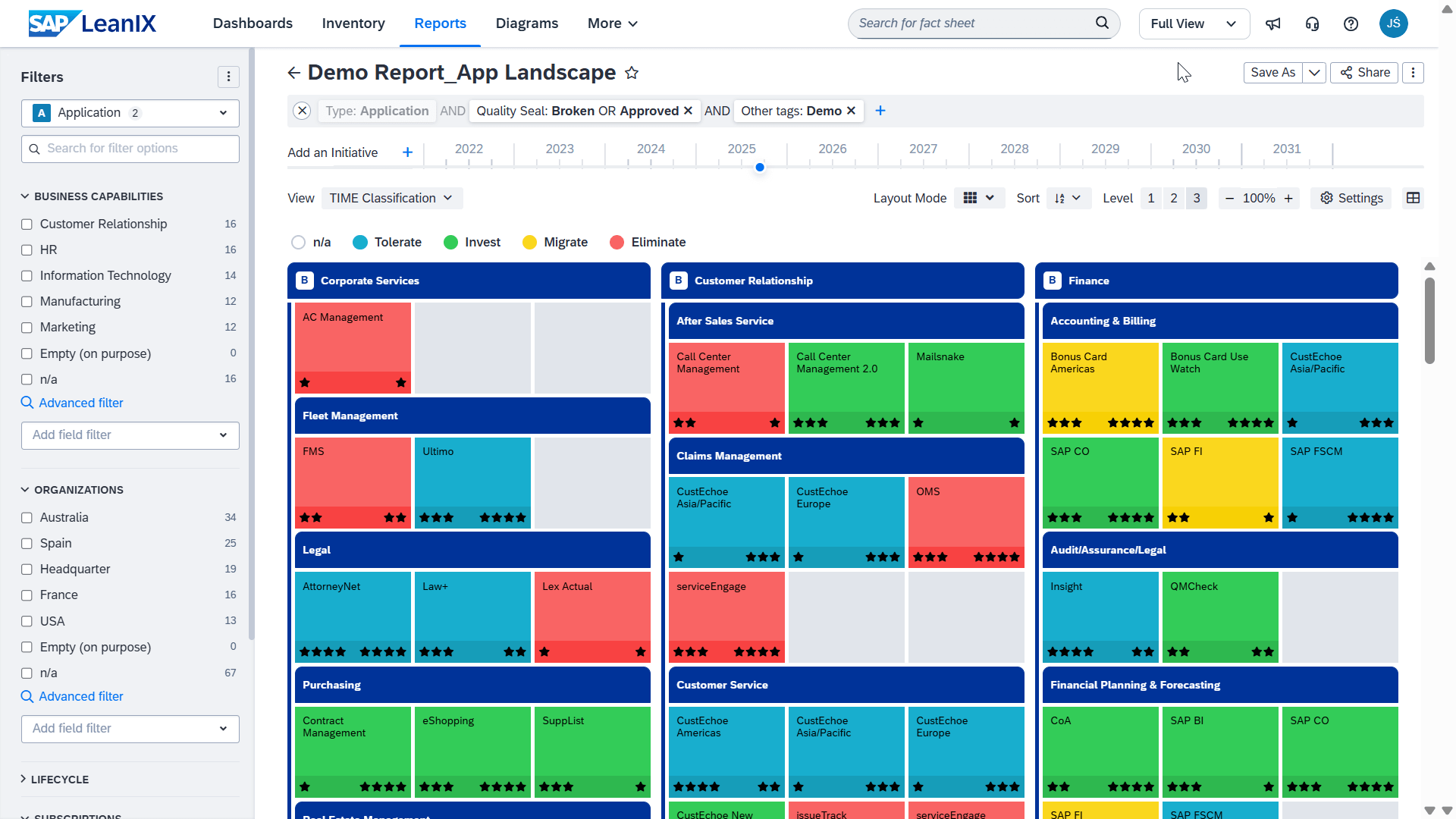
Bridge between IT and business

SAP LeanIX is a single source of knowledge about the application and technical landscape, appropriately positioned in the organization’s business context. With the solution’s support, we don’t have to rely on scattered data, collected from different places in the organization, without being sure we have the complete picture. Do allows us to make decisions faster and based on reliable and complete data.

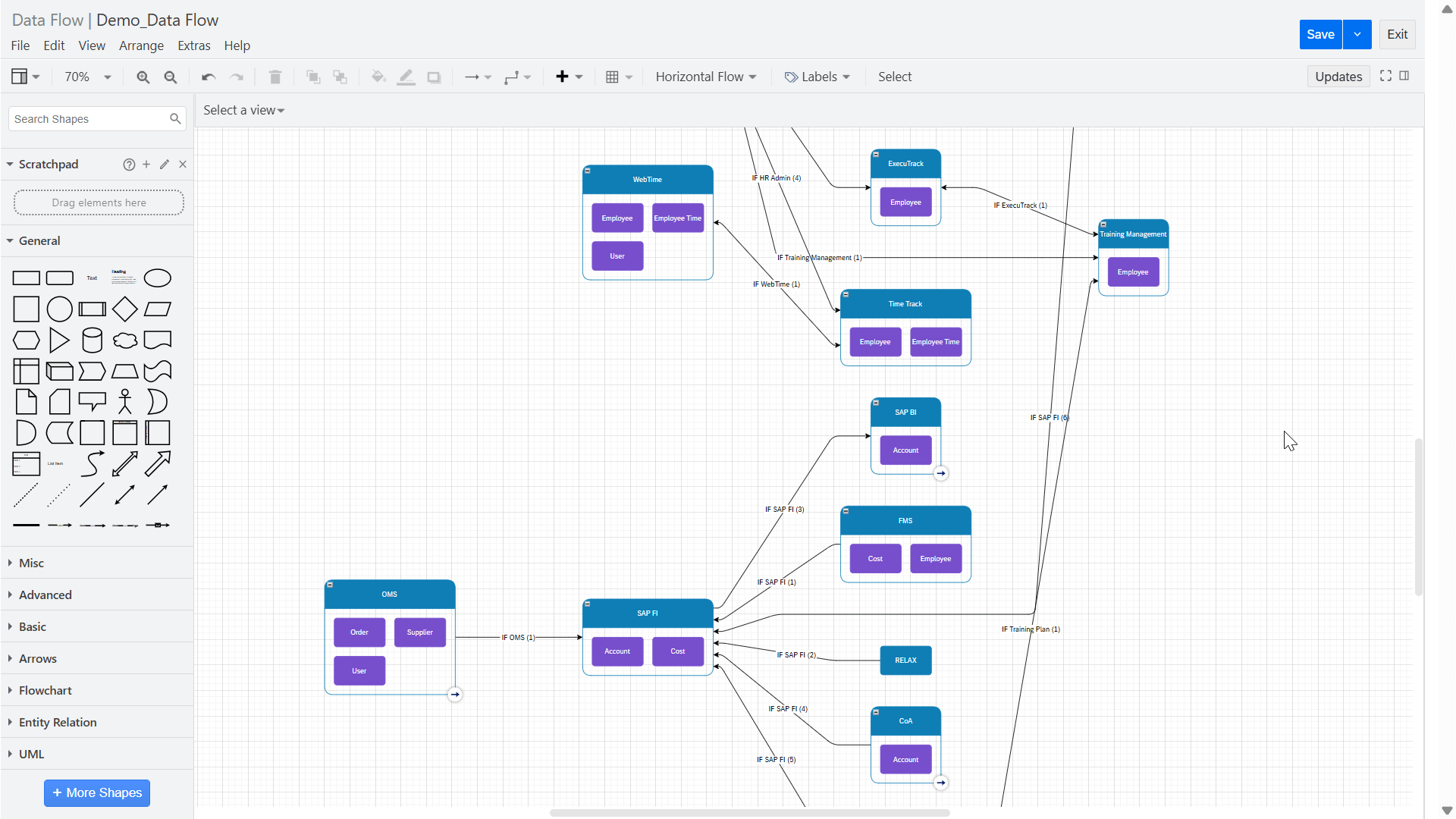
Another aspect is capturing both business and technical dependencies, which can be critical to the success of digital initiatives. Gathering these dependencies is supported both by LeanIX logic tying together different types of fact sheets, but also by functionalities such as diagrams.
Out-of-the-box integrations promote getting value out of a solution faster.

Evaluation and parameterization based on o collected data allows strategic decisions to be made based on the actual needs and priorities of the organization.

SAP LeanIX consists of three modules:

  • Application Portfolio Management – the core module, which supports the mapping, assessment, and rationalization of the application portfolio;
  • Technology Risk and Compliance – monitoring risks related to the lifecycle of IT components and compliance;
  • Architecture and Roadmap Planning – planning transformation initiatives and modeling the target architecture.

The solution is based on a metamodel – a standard data model that describes the application landscape, defines the types of objects that make up that landscape, specifies the standard scope of information stored in the application, and establishes patterns for evaluating the application landscape. It relies on the relationships between individual object types and facilitates the mapping of dependencies, gaps, redundancies, and costs. Using the default metamodel facilitates the maximum utilization of application functionality (maintaining appropriate data quality, optimal use of reports).

The metamodel can be adapted to the organization’s needs (with appropriate assumptions), though it is recommended to stay as close to the standard as possible.

The metamodel proposed in SAP LeanIX divides the entire IT architecture into four layers: technical, application, business, and strategic. The metamodel offers 12 object types, but at the center of this logic is always the application—the element containing business logic and the visual layer, providing physical access for the business user. Other core objects include organizations, business capabilities, and IT components.

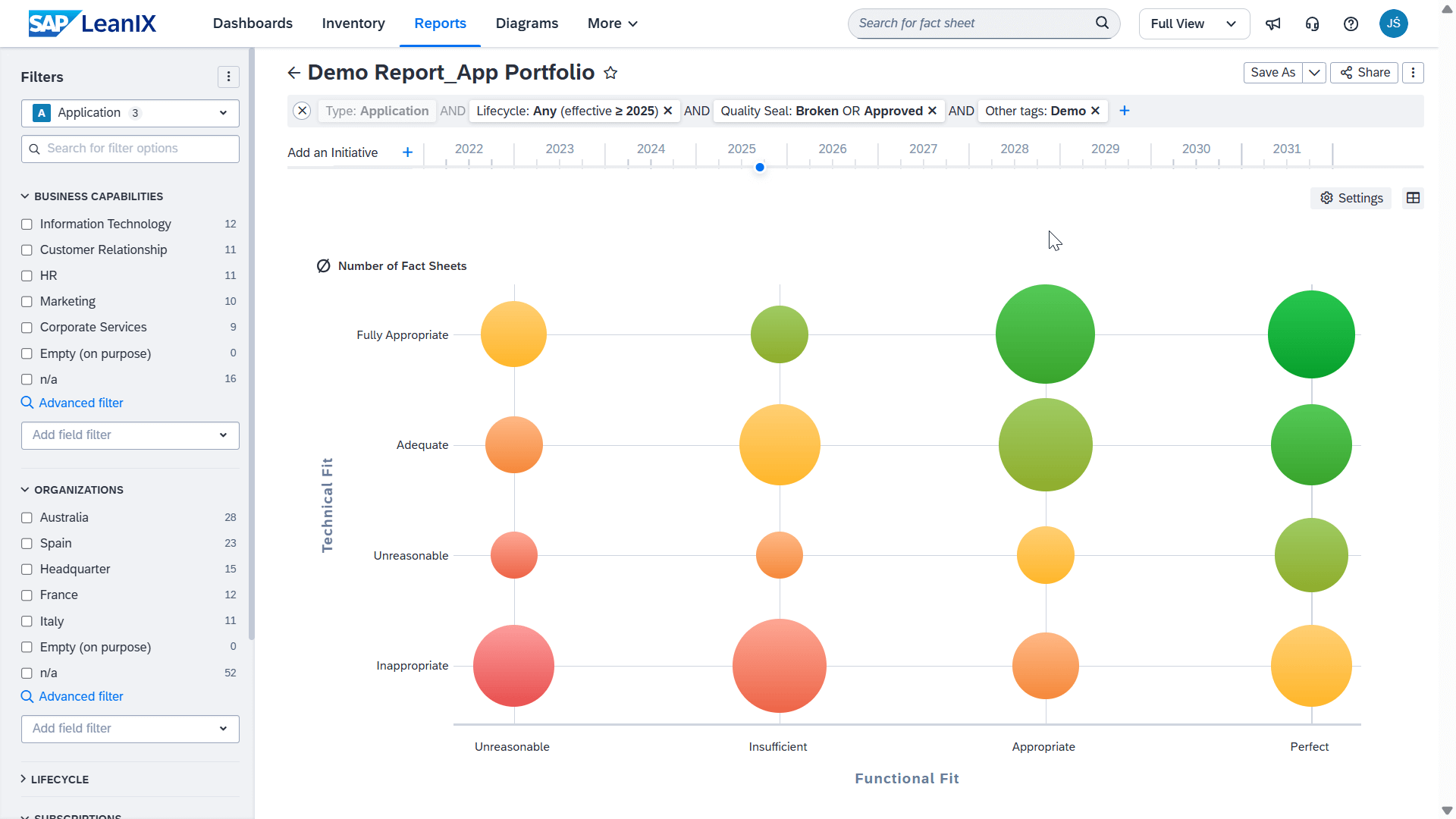
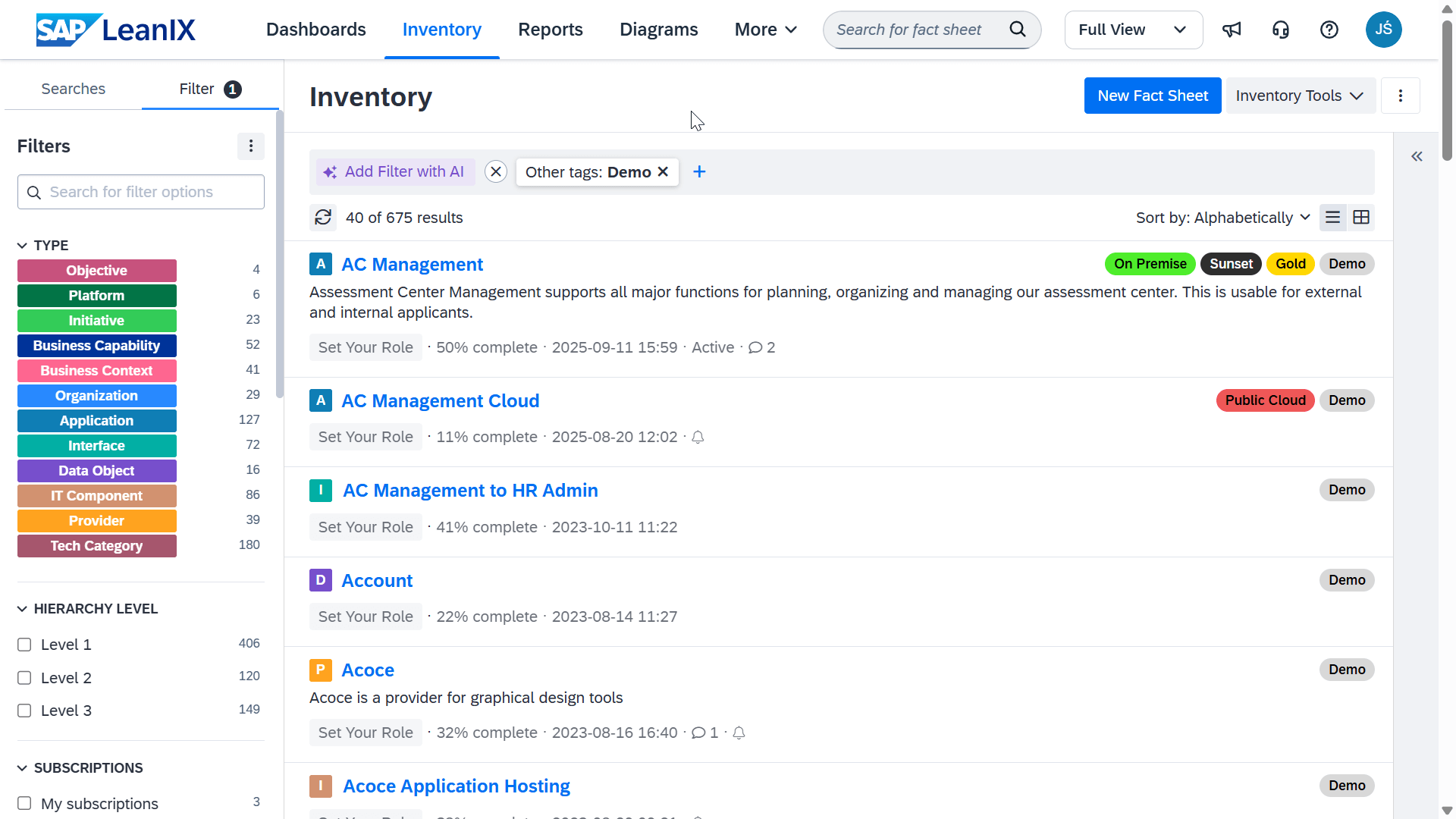
The repository is a central location that collects all types of mapped components. Its standard features include object filtering, displaying objects in a customizable table, and exporting data from the repository. The filtering options are supported by AI tools that enable advanced contextual searches and summaries.

The most important tasks performed when working with LeanIX are:

  • defining objects (applications, IT components, business processes),
  • mapping relationships between them,
  • assessing the criticality of applications for the business,
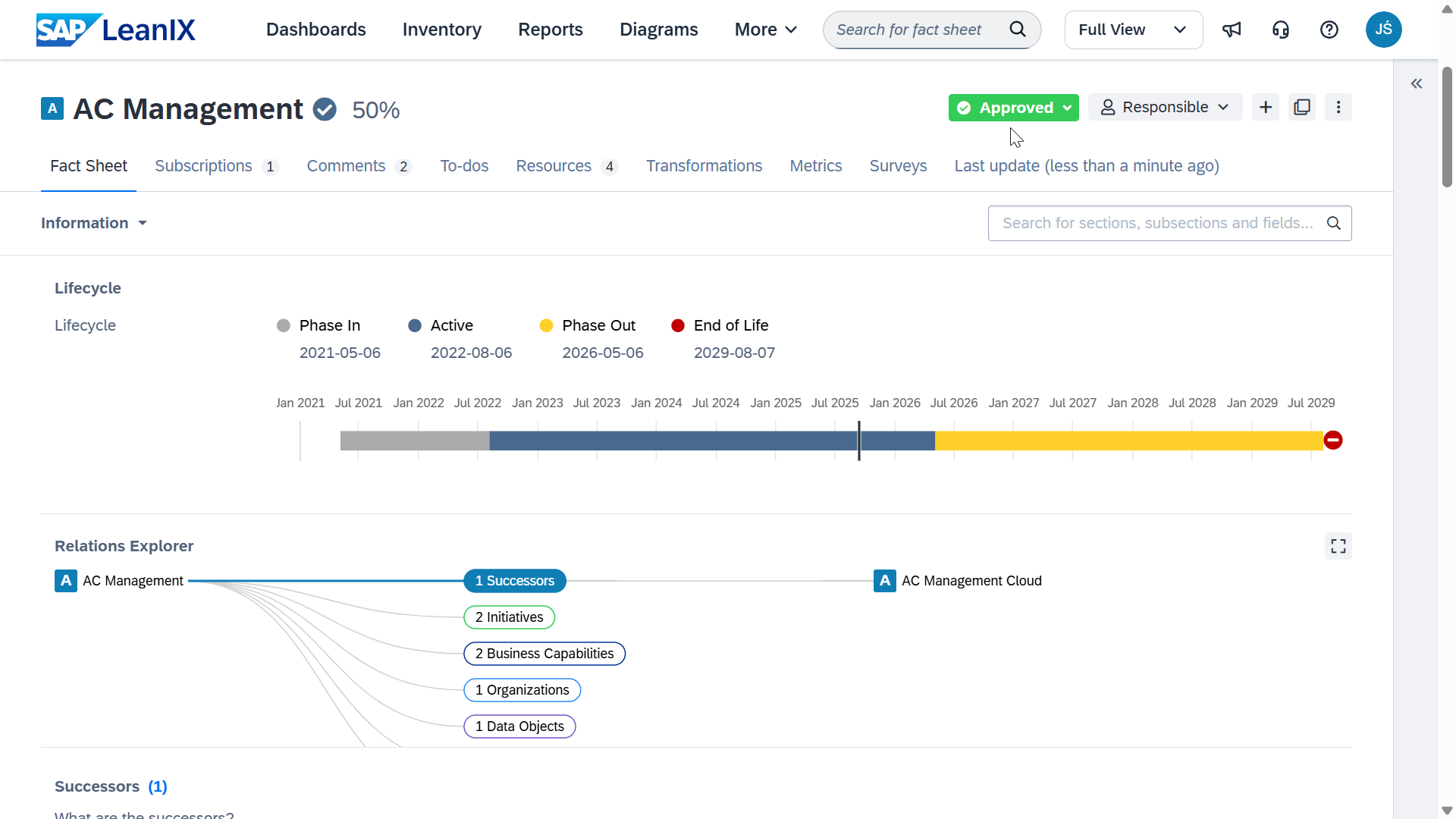
  • tracking costs and the lifecycle of components,
  • modeling data flow diagrams and application dependencies,
  • defining and modeling reports.

Reports generated in LeanIX allow you to obtain answers to key questions for the CIO and CFO in just a few minutes: which applications are critical, what risks are associated with maintaining individual systems, which subscriptions are redundant, and where costs can be reduced.

  • Application portfolio rationalization – elimination of redundant or overlapping systems;
  • Identification of technological risks – e.g., end-of-life support or security vulnerabilities;
  • Better alignment of IT with business needs – mapping applications to business processes and capabilities;
  • Faster decision-making – thanks to pre-built reports and dashboards;
  • Optimization of IT costs – according to IDC, the average reduction is over $422,000 per year;
  • Increased team efficiency – by 35% in EA, 15% in security, and 22% among end users.

The IT environment in large organizations is becoming increasingly complex, and managing it requires not only expertise but also the right tools. SAP LeanIX provides enterprise architects and digital transformation leaders with a tool that bridges the worlds of business and technology, delivering full transparency and reliable data for decision-making.

IDC’s study “The Business Value of SAP LeanIX” (2024) shows that companies using LeanIX achieve an average ROI of 290% over three years, with a payback period of approximately five months. This proves that streamlining the IT landscape and managing it based on reliable data is becoming one of the key elements in building a competitive advantage.

How does SAP LeanIX work?

We invite you to watch a webinar about the SAP LeanIX solution, from which you will learn more about the solution’s functionalities and see it in action.

Implementation of LeanIX

Our experts provide support in the preparation and implementation of SAP LeanIX implementation, as well as in its development.

LeanIX proposes a catalog of use cases that define a certain implementation path. The basic one, which aims to gather data in the system that we can then continue to work with and expand, is Application Portfolio Assessment. In this scenario, we follow three basic steps:

  • Scope definition (indicating the applications that will be reflected and mapped in the system first);
  • Gathering data (including basic application data, relationships between objects such as organizations or business capabilities, functional and technical evaluation and parameterization of these applications using standard fields;
  • Evaluation of the application portfolio (prioritization, application of frameworks, definition of first reports, diagrams and applications).

We recommend starting with SAP LeanIX with a small sample of data, which will allow you to quickly deliver business value, familiarize users with the tool and support change management (quick wins) – such as evaluating a selected piece of the application portfolio.

Another best practice is to stick as close as possible to the standard metamodel and adapt it to the organization only where necessary. Using ready-made implementation scenarios (use cases).

Another tip is to use LeanIX Best Practices for IT architecture modeling. And finally, remember the available built-in tools in LeanIX to support data collection (surveys, tasks, comments).

Write us Call us Send email


    Details regarding the processing of personal data are available in the Privacy Policy.


    +48 61 827 70 00

    The office is open
    Monday to Friday
    from 8am to 4pm (CET)

    General contact for the company
    office.pl@all-for-one.com

    Question about products and services
    info.pl@all-for-one.com

    Question about work and internships
    kariera@all-for-one.com

    This site is registered on wpml.org as a development site. Switch to a production site key to remove this banner.